Linen Closet Organization Ideas That Stay Neat
Published Updated

By Silas Payao
I write practical cleaning and organization guides focused on simple routines, realistic storage ideas, and calmer home systems.
A linen closet can look organized for one afternoon and fall apart the next time someone pulls a towel from the middle of the stack. The problem is rarely laziness. Most linen closets are deep, narrow, crowded, awkwardly shaped, or shared by people who do not know where anything goes back.
Keep dry towels, bedding, and dedicated cleaning cloths in distinct storage groups. Keep cleaning products separately secured; under-sink storage precautions matter if that is where the working supplies live.
The fix is to build the closet around use: towels people grab daily, sheets that belong to specific beds, guest items, cleaning cloths, and backups. Once every shelf has a job, the closet becomes easier to maintain without turning it into a display project or a weekend-long chore.
Start linen closet organization by sorting household jobs
Start by taking everything out, even if the closet does not look terrible. A partial reset leaves hidden duplicates behind and makes the new arrangement fit around old mistakes. Set clean linens on a clean dry surface and group them: bath towels, hand towels, washcloths, sheet sets, blankets, guest linens, cleaning cloths, paper goods, and extra toiletries.
Check condition while everything is visible. Towels with rough edges can become cleaning cloths. Review sheets that no longer fit a bed before returning them to daily storage. Half-empty toiletry backups should be grouped so they are used before new ones are bought. This first sort usually creates more space than a new basket would.
Do not choose containers before this sort is finished. The pile tells you what the closet actually needs. A small home may need fewer categories and more breathing room, while a family closet may need labels because several people put things away.
Give each shelf a clear height-based purpose
Most linen closets become frustrating because the easiest shelf holds the wrong things. Put daily towels and current sheet sets between shoulder and waist height if possible. Keep rarely used blankets, seasonal linens, and guest bedding higher. Heavy or bulky items should stay lower so nobody has to pull them down from above eye level.
A simple shelf map prevents the closet from becoming a mixed stack. If towels live on two shelves, separate them by use instead of color: bath towels together, hand towels together, and washcloths in a small bin. If sheets are the daily frustration, give each bed size one shelf section or one labeled basket.
Test the shelf map with one normal laundry basket before calling it finished. Put away towels, sheets, and cloths at regular speed. If you have to lift three stacks to return one item, the shelf is still too complicated. A good linen closet should survive a tired laundry night, not only a careful organizing session.
Keep a narrow open strip at the front of each shelf. That space gives your hand room to pull one stack forward without dragging the neighboring stack with it. It also makes the closet easier to scan, which matters when clean laundry is being put away quickly.
| Closet zone | Best use |
|---|---|
| Top shelf | Seasonal blankets or guest linens |
| Eye-level shelf | Most-used towels and sheet sets |
| Lower shelf | Bulky paper goods or cleaning cloths |
| Door area | Small items in hooks or shallow pockets |
Fold towels and sheets for access, not decoration
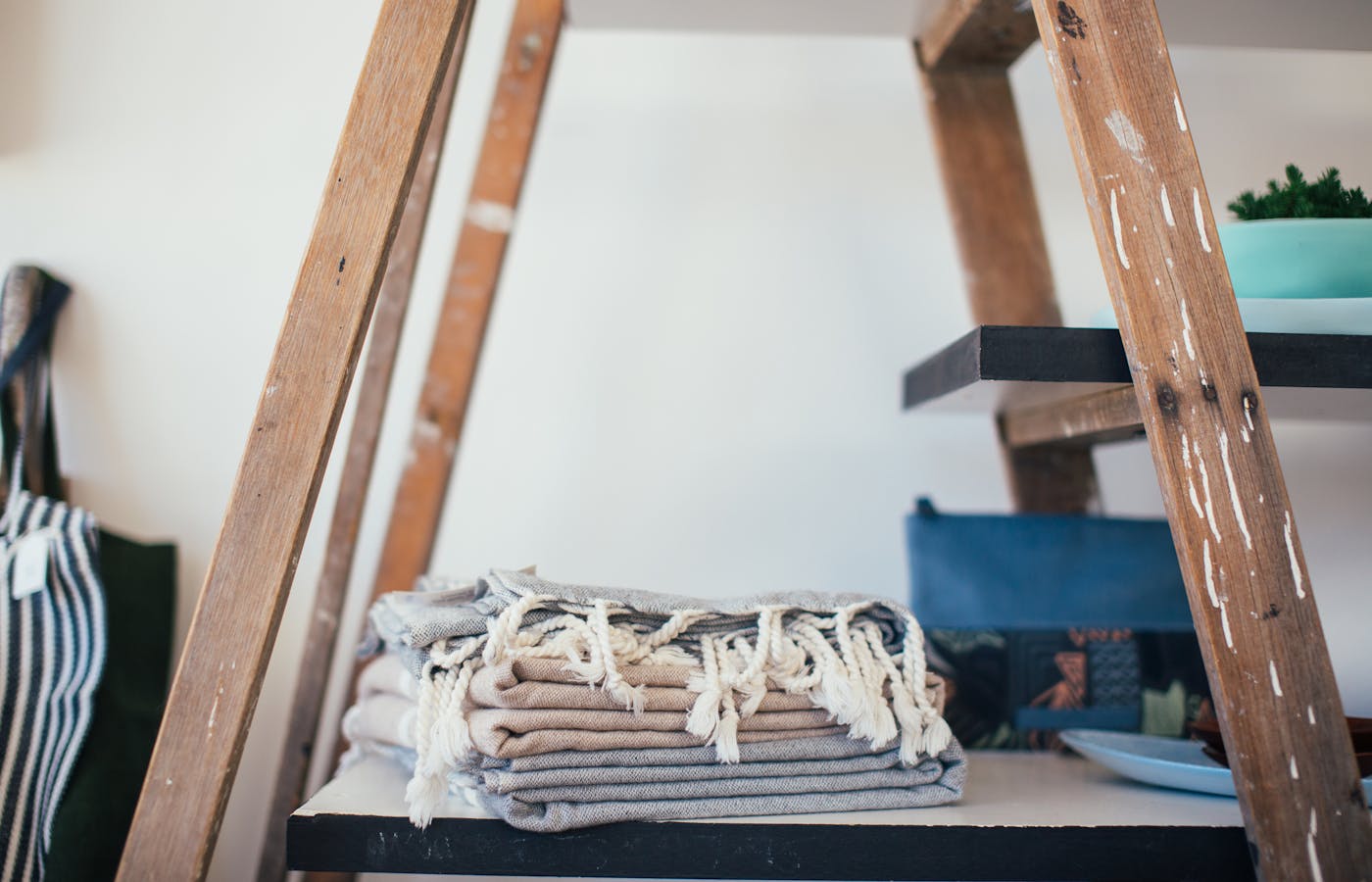
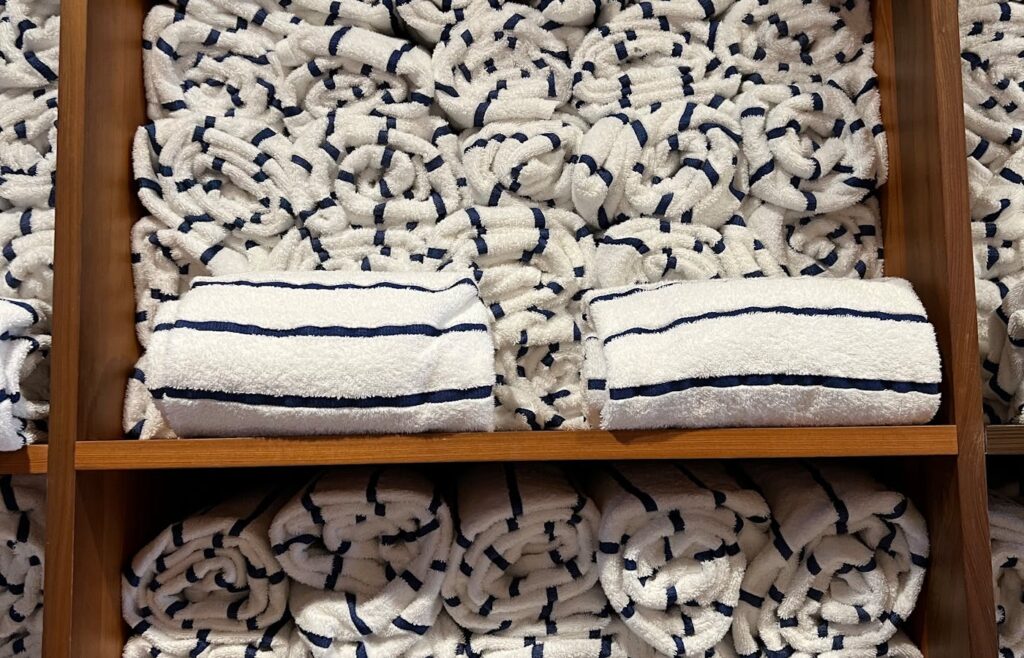
Pretty folds are useful only when they make the stack easier to use. For towels, fold to match shelf depth so the front edge shows every towel at once. Avoid tall stacks that collapse when the middle towel is pulled. Two shorter stacks usually behave better than one dramatic tower.
For sheets, keep sets together. Fold the fitted sheet, flat sheet, and one pillowcase, then place them inside the remaining pillowcase or tie the set loosely with a cotton ribbon. The point is not perfection; it is preventing one fitted sheet from hiding three shelves away from its matching pillowcases.
If labels feel too formal, use shelf position as the label. Put adult towels on the left, kid towels on the right, or everyday sheets above guest sheets. A system that people can understand at a glance will survive longer than a beautiful set of tags nobody reads.
Use bins only where loose items cause repeat mess
Baskets and bins help when a category contains many small items: washcloths, extra soap, travel toiletries, pillowcases, cleaning cloths, or guest supplies. They do not help much when they hide large stacks of towels. Use containers where they solve a handling problem, not where a shelf already works.
Door storage can help, but keep it light. A shallow over-door organizer is useful for washcloths, pillow sprays, small toiletries, or guest items. Heavy bottles can make the door swing badly and may damage hinges over time. If the door already feels crowded, protect the shelves instead of adding another layer.
- Measure the shelf depth before buying.
- Assign one job to each bin.
- Leave enough room to pull the bin forward.
- Label shared bins in plain language.
Limit backups so the closet does not become storage overflow
A linen closet often turns into the place where every extra household item lands: bulk soap, candles, old pillow inserts, random chargers, gift bags, and cleaning sprays. Backups are useful, but they need a limit. Decide how many extras the closet should hold before the rest moves to a pantry, laundry area, or donation box.
A starting example is one active set and one clean backup for a category, adjusted for laundry frequency, bed sizes, guests, and household needs. Anything beyond that needs to earn its space by solving a real problem, not by being “still good.”
For many homes, one open backup per category is enough: one extra hand soap, one spare toothpaste, one pack of toilet paper, one guest towel set, and one set of sheets per bed. Bulk purchases can live elsewhere if the linen closet is small. The most convenient space should serve weekly life first.
A simple rule is to keep the opened backup visible and move sealed overflow out of the prime shelf. When a category has three half-used bottles or two unmatched sheet sets, the issue is not storage; it is a decision waiting to be made.
- Keep daily linens in the easiest reach zone.
- Move bulk supplies away from the main shelf.
- Use older backups before opening new ones.
- Remove items that do not belong to linen care.
Build a ten-minute laundry return routine
The closet stays neat only if clean laundry can return quickly. Make the return path simple: towels to one shelf, sheets by size, cleaning cloths in one bin, guest linens on the high shelf. If every item needs a special fold or a decorative arrangement, the system will break on a busy laundry day.
Once a week, straighten the front edges, remove anything placed in the wrong zone, and check whether a category is overflowing. Overflow is information. It may mean the household owns too many towels, the bin is too small, or the category belongs somewhere else. Adjust the system while the mess is small.
Seasonal items deserve a separate review every few months. Flannel sheets, beach towels, extra blankets, and holiday guest linens should not sit in the easiest spot all year. Moving them up or out during the off-season keeps everyday shelves open for the linens that actually rotate through laundry.
Return only fully dry laundry to the closet, following fabric care labels. Dampness in the shelf itself needs its source checked before linens go back. Cleaning chemicals should have separate secured storage, not share a bin with bedding or toiletries. Keep heavy bins low and leave shelves within their rated loads.

Keep this guide handy
An illustrated summary made for JundHaus. Read the guide above for the details and cautions.
Save to Pinterest (opens in a new tab)