How to Organize Your Home When You Feel Overwhelmed

When every room is asking for attention, the hardest part is not buying bins or making a perfect plan. The hard part is choosing one small place to begin without feeling like the rest of the house is judging you from the background.
That is why home organization works better when it starts with pressure relief. You do not need to organize the whole home today. You need one area that gives you a little more room to breathe, move, cook, sleep, or leave the house without searching for the same missing item again.
The first win should make the next step easier, not prove that you can overhaul your entire life in one weekend. I would treat this as a control problem: reduce decisions, shrink the area, and build a system you can repeat when your energy comes back.
Pick one place to organize when overwhelmed
Start with the place that causes the most daily friction, not the place that would look best in a photo. An entry table that eats keys, a kitchen counter covered in mail, a bathroom cabinet with products falling out, or a bedroom chair full of clothes can be a better first target than an entire room.
The right pressure point has a clear boundary. It should be small enough to finish in one sitting and important enough that you will feel the improvement tomorrow. A drawer, one shelf, one counter, one closet rod, or one side of a pantry is usually better than “the bedroom” or “the kitchen.”
Use this quick decision table if everything feels equally loud:
| Area | Choose it first when | Skip it for now when |
|---|---|---|
| Entryway | You lose keys, bags, or shoes daily | It is mostly decorative clutter |
| Kitchen counter | Cooking or cleaning is harder than it should be | You need a full pantry project first |
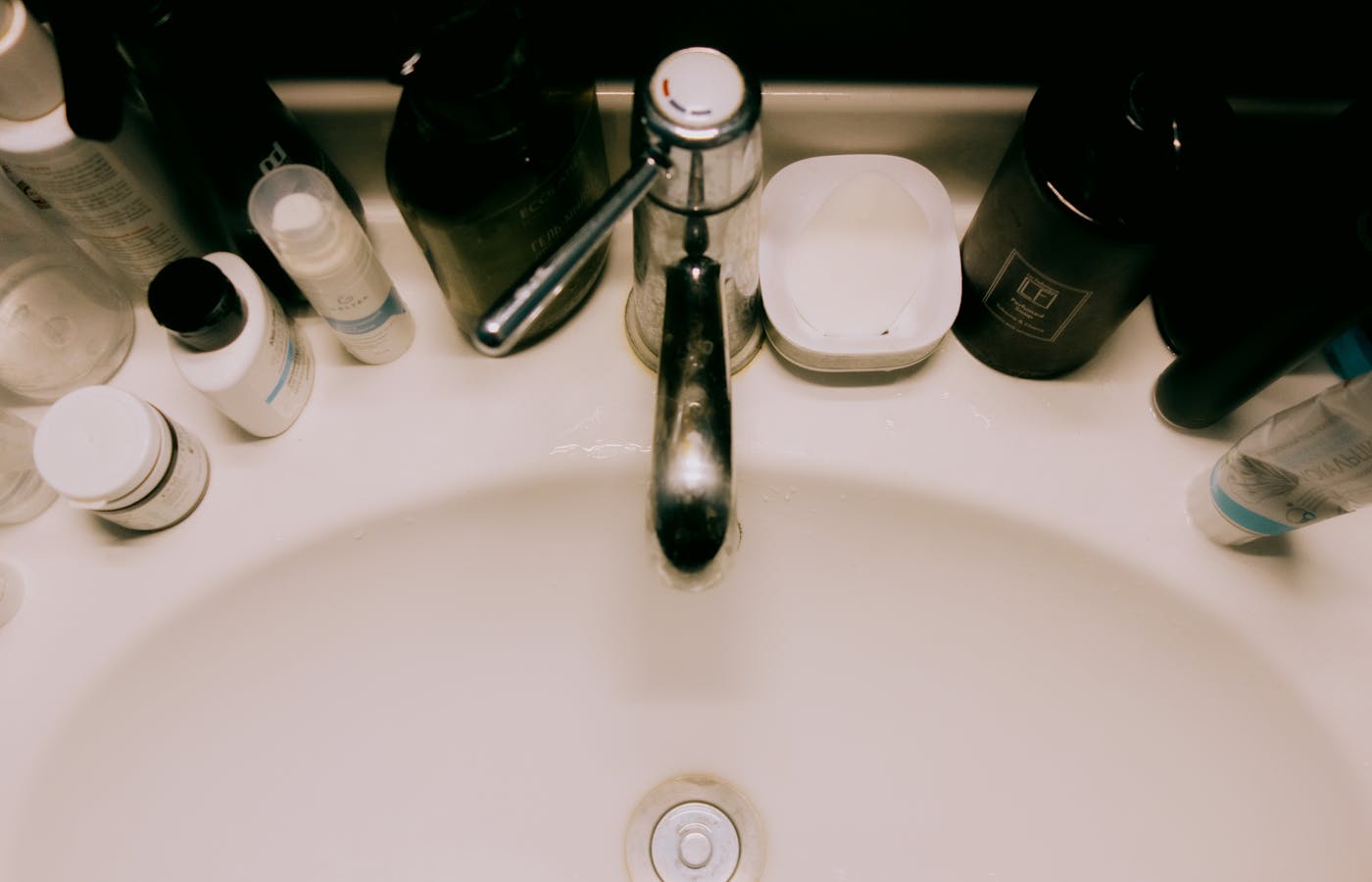
| Bathroom cabinet | Mornings start with searching | Products belong to several people who are not present |
| Bedroom chair | Clothes pile up every night | Laundry systems are completely broken |
Lower the number of decisions when overwhelmed
Feeling overwhelmed usually means there are too many open decisions sitting in plain sight. Every object is silently asking where it belongs, whether it should stay, whether someone else needs it, or whether you need to buy something before you can deal with it. That is exhausting before any cleaning begins.
Reduce the choices to a few temporary categories. Use “keep here,” “move elsewhere,” “donate,” “trash,” and “not sure.” The not-sure category matters because it stops one difficult object from freezing the whole session. You can review that group after the area is calmer.
Do not create twelve detailed piles at the start. The first pass is not about designing a perfect storage map; it is about getting visible clutter into understandable groups. If you can see the surface again, you have already changed the problem.
- Keep only the categories you can act on today.
- Move misplaced items to a basket instead of walking around the house repeatedly.
- Throw away obvious trash before making emotional decisions.
- Put uncertain items in one temporary box with a review date.
- Stop before the area becomes too scattered to finish.
Give everyday home items the easiest homes
After sorting, assign homes based on use, not wishful thinking. The items used every day should live where your hand naturally reaches. If the most-used things require lids, stacking, bending, or moving three other objects, the system will probably collapse when life gets busy.
For a kitchen counter, daily tools may need a small tray, a single drawer, or one clear container nearby. For an entryway, keys and wallets may need a bowl or hook within arm’s reach. For a bathroom cabinet, morning products should sit in the front, while extras and backup items move behind or higher.
This is where a lot of home organization advice becomes too complicated. You are not trying to make every item equally easy to reach. You are choosing which items deserve the easiest homes because they support the rhythm of the day. The rarely used cake stand, guest towels, spare candles, or extra office supplies can live farther away.
Convenience is not laziness in home organization; it is how the system survives normal days. Put friction on the things you use rarely, not on the things you touch constantly.
Use home storage containers after you know the job
Containers help only when they have a specific job. Buying baskets before sorting can make the house look temporarily neater while hiding the same confusing decisions in prettier boxes. Wait until you know what needs to stay, how often you use it, and where it should live.
A good container answers one clear question: what belongs here? It might hold mail waiting for action, cleaning cloths under the sink, chargers near a desk, winter accessories by the door, or extra toiletries in a bathroom cabinet. If a bin becomes a mixed-storage mystery, it is not organizing anymore.
Labels are useful when more than one person uses the space or when the container is not transparent. Keep labels plain. The best label is the one that makes it easier to put the item back, not the one that sounds most polished.
Size matters too. A container that is too small creates overflow immediately, while a container that is too large invites unrelated items to move in. Leave a little breathing room, but do not create a large blank space that becomes a catchall by next weekend.
Stop before home organizing turns into a bigger mess
One reason people avoid organizing is that projects often look worse halfway through. That is normal, but it is also why the stopping point matters. Before you pull everything out, decide what “done enough” means for this session. For a drawer, it might mean trash removed, daily items grouped, and the drawer closing easily.
Leave energy for the final five minutes. Put donations in a bag, take trash out, move misplaced items to their rooms, wipe the surface if needed, and return the useful items to their new homes. This closing step is what turns sorting into actual home organization.
If you run out of time, close the project cleanly instead of opening another area. A half-finished second project can erase the relief from the first one. The house does not need more open loops when you already feel overwhelmed.
Build a small weekly reset to organize your home
The goal is not to keep the home perfect. The goal is to prevent the same pressure point from rebuilding until it feels impossible again. A short weekly reset gives the system a chance to recover before clutter becomes a full project.
Use a simple routine:
- Choose the same pressure point you organized first.
- Remove obvious trash and items that migrated there.
- Return daily-use items to their easy homes.
- Empty the move-elsewhere basket into the right rooms.
- Review the not-sure box and make one decision.
- Adjust one container, hook, tray, or shelf if the system is fighting you.
When you organize your home while overwhelmed, the smartest plan is smaller than your ambition. Choose one pressure point, reduce decisions, give daily items easy homes, and stop cleanly. A calm first area is not the whole house, but it gives you a place to stand while the rest becomes easier.
If the next area still feels too big, repeat the same process instead of inventing a new one. Familiar steps are part of what makes the work feel manageable.