Toy Storage Ideas That Make Cleanup Easier
Published Updated

By Silas Payao
I write practical cleaning and organization guides focused on simple routines, realistic storage ideas, and calmer home systems.
Toy cleanup is harder when every bin becomes a mixed pile. Blocks, cars, stuffed animals, puzzle pieces, art supplies, pretend food, and tiny accessories all land together, and the next play session begins with searching instead of playing.
The best toy storage ideas for small spaces make cleanup obvious. Children need storage they can reach, categories they can understand, and limits that keep the floor from becoming the only available shelf. The goal is not a perfect playroom; it is a system that can be reset quickly after real use.
Safety changes the storage decision too. Tiny pieces, heavy bins, art supplies, cords, and anything that could tip from a shelf need a different home than plush toys or large blocks. Easy cleanup should not make risky items easier to grab.
Start toy storage by reducing active toys
Storage works better when fewer toys are active at the same time. A small room can hold a reasonable collection, but it cannot make every toy easy to use if everything is out all week. Begin by separating broken toys, outgrown toys, duplicate pieces, and items that no one chooses anymore.
This does not mean removing every extra toy forever. Some items can move to a closet, a high shelf, or a rotation box. The visible play area should hold the toys that are current, complete, and easy to put away. A smaller active set gives each bin a clearer job.
Watch how the room gets messy before buying containers. If the same category spreads across the floor every day, that category may need a larger bin or a lower shelf. If a toy is ignored unless an adult finds it, it may not deserve prime storage space.
Reducing active toys also makes cleanup less emotional. A child can put away five categories more easily than twenty. The storage system begins with fewer decisions, not with more bins. That smaller set also makes missing pieces easier to notice before they drift into other rooms.
Use open toy storage bins in small spaces
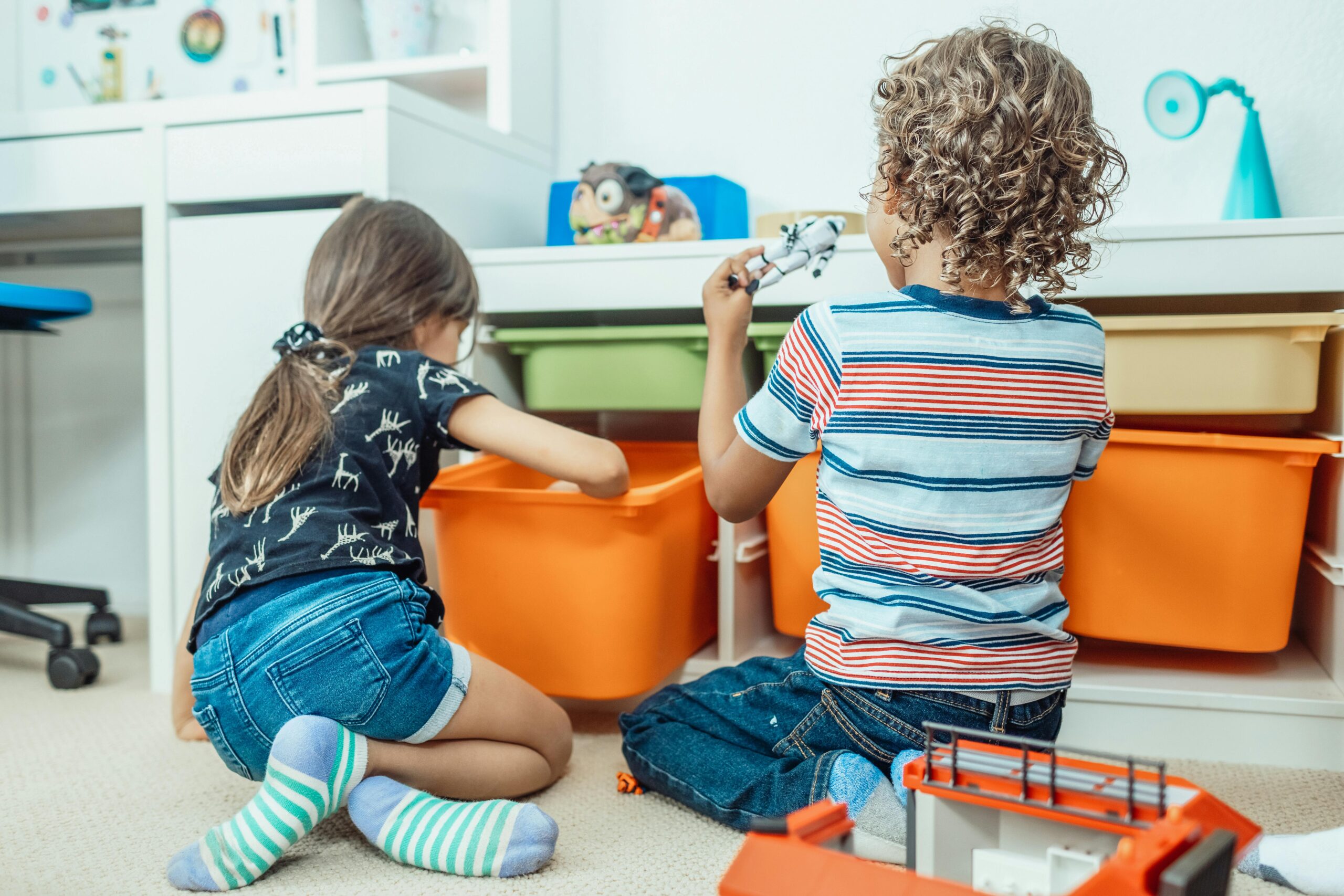
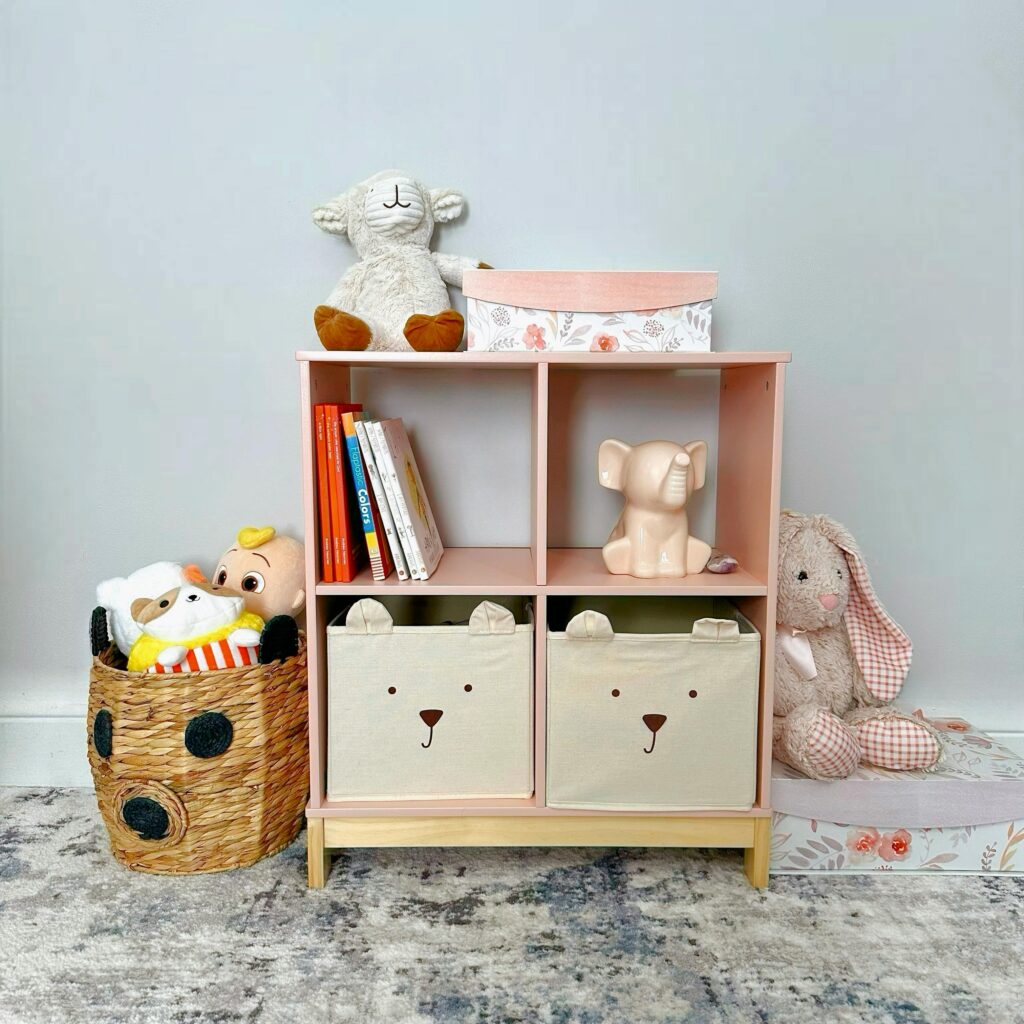
Open bins are useful because they remove one step from cleanup. A child can drop blocks, cars, dolls, animals, or pretend food into a visible container without opening a lid, matching a latch, or sliding out a heavy box. That small difference matters at the end of the day.
The best everyday bins are not always the prettiest ones. They should be sturdy, light enough to move, and sized for the category. If a bin is too deep, small toys disappear at the bottom. If it is too small, cleanup turns into balancing toys on top until the pile spills again.
Keep the most-used bins low. A bin that requires adult help will not support independent cleanup. Keep toys needing supervision in adult-controlled storage; height alone cannot prevent access. Follow toy age labels, especially where children under three may encounter small parts. Daily toys should sit where children can reach both the toy and the return spot. Secure furniture according to its instructions so accessing a bin does not create a tip-over risk. The CPSC's furniture anchoring guidance explains that precaution.
Open bins also make missing pieces easier to spot. When the train track bin is visible, a stray track on the floor has an obvious home. Closed containers hide that feedback. If a bin looks full even after cleanup, the category is probably too broad.
Group toys by how children actually play
Adult categories can be too precise. A child may not care whether something is a vehicle, a construction toy, or a pretend play accessory. Storage should follow the way toys are used together. If cars and road pieces always come out together, they may belong in the same bin.
Useful toy categories often include building toys, vehicles, dolls or figures, stuffed animals, dress-up items, pretend food, puzzles, books, and art supplies. The exact list depends on the home. The system should be simple enough that a child can guess where a toy goes without asking.
Mixed bins are fine when the mix is intentional. A pretend kitchen bin can hold food, plates, cups, and small utensils because those pieces create one kind of play. A random bin that holds puzzle pieces, socks, crayons, and toy animals is not a category; it is a delay.
Label the category in plain language. If a child cannot read yet, a picture label or simple symbol can still help. The label is not decoration; it is a cleanup instruction. The best category name is the one the child already uses during play.
Create a landing zone for unfinished play
Not every toy needs to be fully reset every night. A half-built block tower, a puzzle in progress, or a pretend setup may be worth saving for the next day. Without a landing zone, unfinished play either gets destroyed too soon or spreads across the whole room. Use a shallow tray so the saved pieces stay visible without spreading into the walkway.
A tray, low table, mat, or single shelf can become the unfinished-play spot. The rule should be clear: one project can stay there, but everything else returns to storage. This gives children some control while protecting the room from turning into several unfinished zones at once.
The landing zone also helps adults avoid constant negotiation. Instead of deciding item by item, the household has one place where unfinished play is allowed. If the space is full, something needs to be finished, photographed, or put away before a new setup starts.
Choose a landing zone that is visible but not in the main walkway. A flat tray under a bed, a low shelf, or one corner of a play table can work if the boundary is easy to see. The point is to save one meaningful project, not every pile from the day.
Make labels useful instead of decorative
Labels help only when they match the people using the system. A beautiful label that says “miscellaneous play accessories” may look tidy, but it does not help a child make a fast decision. Use short words such as blocks, cars, animals, dolls, books, costumes, or art.
Picture labels work well for younger children and shared playrooms. A simple photo of the bin contents can be more useful than a printed icon. If the bin holds toy animals, take a quick picture of those animals and tape it to the front. The label then shows the exact home.
Label placement matters too. Put labels where they are visible when the bin is on the shelf, not on the lid or bottom. If bins are swapped often, use removable labels so the storage can change without becoming confusing.
A label should answer the cleanup question before anyone asks it. If the label does not make the next action clearer, simplify the category or change the wording. Review labels when toys change, because old labels quickly turn into clutter instructions. Keep the wording honest.
Rotate toys without complicating small-space storage
Toy rotation can help small spaces, but it should stay simple. A rotation box is just a place for good toys that are not currently active. After a few weeks, one or two categories can swap back into the play area while another set rests out of sight.
Do not rotate everything at once. A sudden full change can confuse cleanup and make old favorites hard to find. Keep core toys available if they are used daily, and rotate the categories that create the most clutter or lose attention quickly.
Good rotation candidates include:
- Extra stuffed animals that do not all fit on the shelf.
- Large sets with many small pieces.
- Seasonal toys or dress-up items.
- Puzzles that are currently too easy or too hard.
- Duplicate toys that compete for the same storage space.
A rotation box should be labeled for adults too. If everything hidden away becomes forgotten, the system turns into long-term clutter instead of useful storage.
Set a simple reminder to review the box before a birthday, holiday, or school break. That timing helps you decide what should return, what should be donated, and what still matches the child’s current play.
Build a small-space toy cleanup routine children can repeat
Storage ideas become useful when they turn into a routine. Cleanup should have an order that children can repeat with less adult direction over time. The routine can be short, visual, and tied to a normal moment such as before dinner, before bath, or before bedtime.
Use this simple order:
- Put unfinished play on the landing zone.
- Return building toys to their bin.
- Return pretend play items to their bin.
- Put books back on the shelf.
- Place stuffed animals in the basket or bed spot.
- Check the floor for tiny pieces.
- Close the room by sliding bins fully back into place.
Keep the routine realistic. Start with a short reset at a time the household can repeat, with adult help suited to the child's age. If cleanup always takes too long, the active toy count is probably too high or the categories are too vague.

Keep this guide handy
An illustrated summary made for JundHaus. Read the guide above for the details and cautions.
Save to Pinterest (opens in a new tab)