Under-Sink Organization Ideas for Kitchen and Bathroom
Published Updated

By Silas Payao
I write practical cleaning and organization guides focused on simple routines, realistic storage ideas, and calmer home systems.
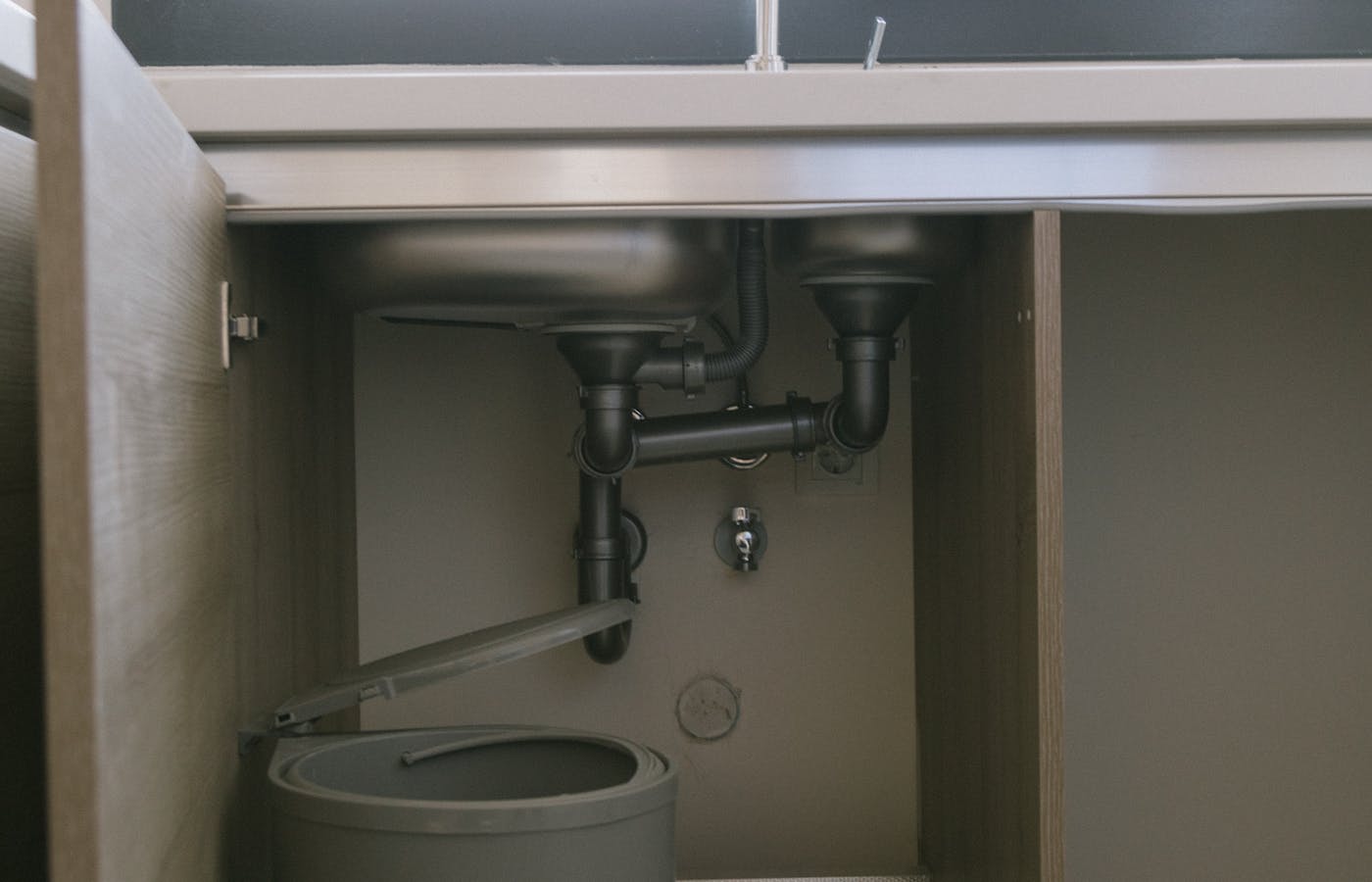
The cabinet under a sink is awkward by design. Pipes cut through the middle, the back is hard to reach, and one small leak can ruin whatever sits on the floor. That is why under sink organization ideas need to start with the shape of the cabinet, not with a pretty row of containers.
Use this space for a defined set of nearby tasks. It should hold the few items you actually use near that sink, protect the plumbing area, and make leaks easier to notice. If the cabinet only looks organized when the door is open for a photo, it is probably too complicated for daily life.
Empty the under-sink cabinet before buying organizers
The best first step is boring: take everything out. Under-sink cabinets collect half-used sprays, duplicate sponges, old dishwasher tabs, extra trash bags, vases, rags, pet items, hair tools, and products that migrated there because no one knew where else to put them. You cannot organize that mix well while it is still packed around pipes.
Wipe the cabinet floor and check for swelling, stains, smell, rust, mildew, or sticky residue. These signs do not always mean an active leak, but they tell you the area needs attention before more supplies go back in. If the cabinet floor is already damaged, use a washable liner or tray after the source is handled.
Do not buy bins until you know what is staying. Measure the usable width, depth, and height around the pipes. A perfect container that does not clear the drain line becomes another piece of clutter.
Keep the plumbing area visible and easy to reach
Pipes are the reason under-sink storage behaves differently from a normal cabinet. Leave room around the drain, shutoff valves, garbage disposal, water lines, and any filter system. If something drips, you want to see it quickly. If a valve needs to be turned, you do not want to unload a stack of heavy products first.
Place taller items to the sides when possible, not directly under the trap. Keep the center zone lighter and easier to move. In a kitchen, the garbage disposal may take a large part of the usable space. In a bathroom, the sink bowl and plumbing may leave narrow side pockets instead of one open area.
Access is part of the organization plan. A cabinet that hides plumbing too well can make a small leak sit unnoticed for weeks. Under-sink organization should make the space calmer without making maintenance harder.
Choose bins that can handle spills and odd shapes
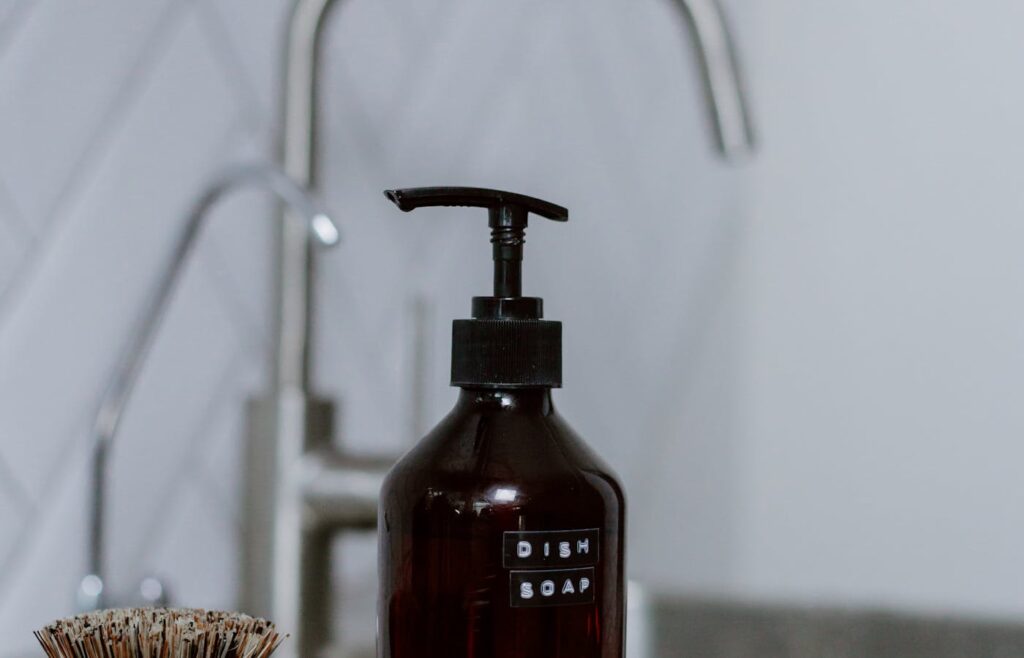
Under a sink, washable bins are usually better than fabric baskets. Cleaning sprays, dish soap, hand soap refills, trash bags, and bathroom products can leak or leave residue. Plastic bins, handled caddies, turntables with raised edges, or shallow trays are easier to rinse and return. Under-sink supplies are easier to return when storage bin organization keeps refills, cleaners, and backups grouped by purpose.
Use the cabinet shape to decide the container type. A wide cabinet may handle two side-by-side bins. A narrow bathroom vanity may need one slim tray and one small caddy. If pipes interrupt the middle, use two smaller containers instead of forcing one large bin to fit around everything.
Clear bins can help if several people use the cabinet, but labels may be enough. The goal is not to display every product. The goal is to make categories easy to grab: daily sink items, backup refills, trash bags, bathroom extras, or specialty cleaners that should not be mixed with everything else.
Separate daily supplies from backup products
Backup products should not crowd the first layer. Extra soap, unopened sponges, refill packs, and duplicate sprays can sit in a rear bin or side zone if there is space. If the cabinet is small, backups may belong in a utility closet instead. Under-sink storage gets messy fast when it tries to become the whole household supply room.
A simple front-and-back split makes the cabinet easier to reset. The front row answers today’s need. The back row holds planned extras. When both rows do the same job, you lose track of what you own and buy more than the space can handle.
- Put daily items in the easiest front zone.
- Move unopened backups behind them or to another storage area.
- Keep plumbing access clear enough to inspect quickly.
- Use one bin per category instead of one bin per product.
- Remove anything you would not use near that sink.
Use vertical space without blocking the sink pipes
Stacking can help, but it has to respect the plumbing. A small shelf, tension rod, door rack, or two-tier drawer may create useful space if it fits around pipes and still slides or opens smoothly. Before adding height, test whether you can reach shutoff valves and see the cabinet floor.
Use a tension rod only within its product instructions and rated load, where a falling item will not damage pipes or release chemicals. A tray on the cabinet floor may be simpler. Door racks can work for gloves, small brushes, or lightweight refills, but they need clearance when the door closes. Sliding drawers are convenient only if the pipes do not stop the drawer from moving fully.
Vertical organizers should solve a real problem. If the cabinet only has six useful products, one tray may be better than a shelf system. Leave some space empty when an organizer would obstruct cleaning or maintenance.
Store cleaning products with safety and moisture in mind
Kitchen and bathroom cabinets often hold products that should be handled with care. Keep cleaning products upright, closed, and separated from items that touch skin, pets, or food. Keep chemicals inaccessible to children and pets in a secured location consistent with their labels. If the cabinet cannot provide that, use another location.
Moisture matters too. Paper towels, toilet paper, cardboard boxes, and spare cloths can absorb dampness under a sink. If you store them there, keep them in a bin or away from the cabinet floor. Check the area after plumbing repairs, dishwasher issues, or a bottle leak.
Do not mix cleaning products, and do not store unlabeled bottles. If a product label is damaged or you cannot remember what is inside, it is safer to dispose of it properly than to guess later. Under-sink storage should reduce household risk, not hide it behind a cabinet door.
- Keep bottles upright and caps closed.
- Store risky cleaners away from children and pets.
- Protect paper goods from the cabinet floor.
- Remove mystery bottles and expired products.
- Leave enough open space to spot dampness early.
Make kitchen and bathroom cabinets serve different jobs
The kitchen under-sink cabinet usually handles wet cleaning, dishes, trash, and quick resets. It may need dish soap, dishwasher tabs, sponges, gloves, a small brush, trash bags, and a multipurpose cleaner. Keep food storage containers, pantry overflow, and delicate linens somewhere else even if the cabinet appears large and dry.
The bathroom under-sink cabinet often needs a different plan. Toiletries, toilet paper, hair tools, grooming supplies, hand soap refills, and bathroom cleaners can end up together. Give bathroom cleaners their own bin so they do not sit against towels, makeup, or personal care items. Heat tools should cool fully before storage.
Each sink should store what happens near that sink. This sounds obvious, but it prevents the cabinet from becoming a general hiding spot. If an item is always carried to another room before use, it probably belongs in that other room.
Reset the cabinet before it turns into a pile again
An under-sink cabinet stays organized when the reset is easy. Inspect periodically and whenever you notice a leak or spill, looking for dampness, empty bottles, products that fell behind bins, and supplies that no one uses. Pull the front bins forward, wipe the cabinet floor if needed, and put duplicates where they actually belong.
Do not wait for the cabinet to be terrible before adjusting it. If trash bags are always sliding out, give them a bin. If spray bottles keep tipping, use a caddy. If a back corner is unreachable, stop storing important items there. The cabinet is telling you what part of the setup is too fussy.
Do not use an organizer or shelf to support, pull, or alter plumbing. A swollen base, active leak, electrical component exposed to water, or persistent mold needs the cause assessed and repaired. Keep the area accessible until that is resolved; a liner should not hide ongoing damage.

Keep this guide handy
An illustrated summary made for JundHaus. Read the guide above for the details and cautions.
Save to Pinterest (opens in a new tab)