
Kitchen Counter Organization Ideas That Still Look Clear
Published Updated

I bring a warm, detail-oriented eye to home routines, decluttering ideas, and everyday ways to make a space feel easier to live in.
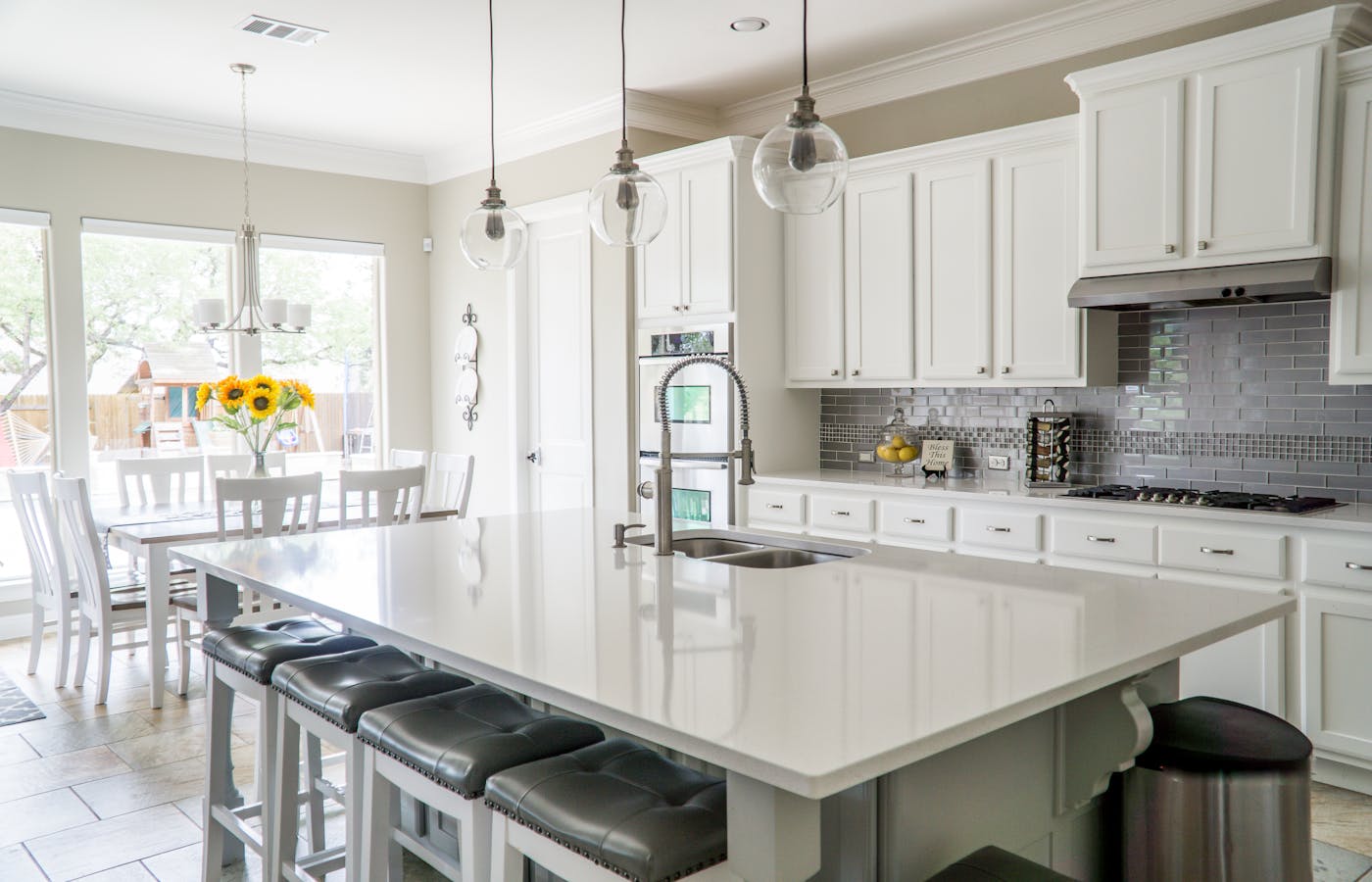
Mail, chargers, food packages, and small appliances can spread across a kitchen counter until there is nowhere to chop dinner. Start by clearing the section you actually use for food preparation. Then decide which daily tools can stay out without making that space harder to use or clean.
The counter has to support real cooking without acting like open storage for the whole kitchen. Choose what earns a visible place, then give each group a boundary. Leave enough space to prepare food and wipe around the tools you use every day.
Food-prep counters also need a hygiene check. Anything left out should be easy to lift, wipe around, or move before chopping food. If a tray, appliance, or decor piece makes cleaning harder, it may belong somewhere less active.
Start with the counters you actually use
Before buying trays or jars, watch how the counter works for a normal day. Notice where you prep food, where coffee happens, where dishes land, where school papers appear, and where clutter repeats. A counter that looks organized but blocks the chopping area will not stay that way. The working zones have to come first.
Clear everything once and sort items by job: cooking, coffee, sink cleanup, fruit, vitamins, mail, charging, decor, and things that simply never found a better home. This makes the problem less emotional. You are not deciding whether you like an object. You are deciding whether that object belongs on a visible work surface.
The best counter setup leaves room for the next task. If you need to move five things before cutting vegetables or unloading groceries, the organization is too crowded. Keep the busiest section of counter as open as possible, even if another corner holds a few daily-use kitchen items.
Small kitchens benefit from this even more. A narrow counter may only have one true prep zone, so that zone should not hold paper towels, snack baskets, decor, and appliances at the same time. Protect the usable space first; style can happen around it.
Give kitchen counter organization a visible limit
A clear-looking counter usually depends on limits, not on matching containers. Choose a maximum number of items that can stay out in each zone. The coffee area might hold the machine, one canister, and a small tray. A nearby cooking-supply zone might hold salt and utensils, outside the appliance's heat and clearance areas. Store oil as its label directs, away from heat. The sink area might hold soap, a brush, and a towel.
Visible limits prevent slow creep. If the tray is full, something has to leave before something new can stay. If the appliance corner already holds the toaster and blender, the mixer may need a cabinet. This is not about strict minimalism. It is about keeping the counter from becoming the easiest place to postpone decisions.
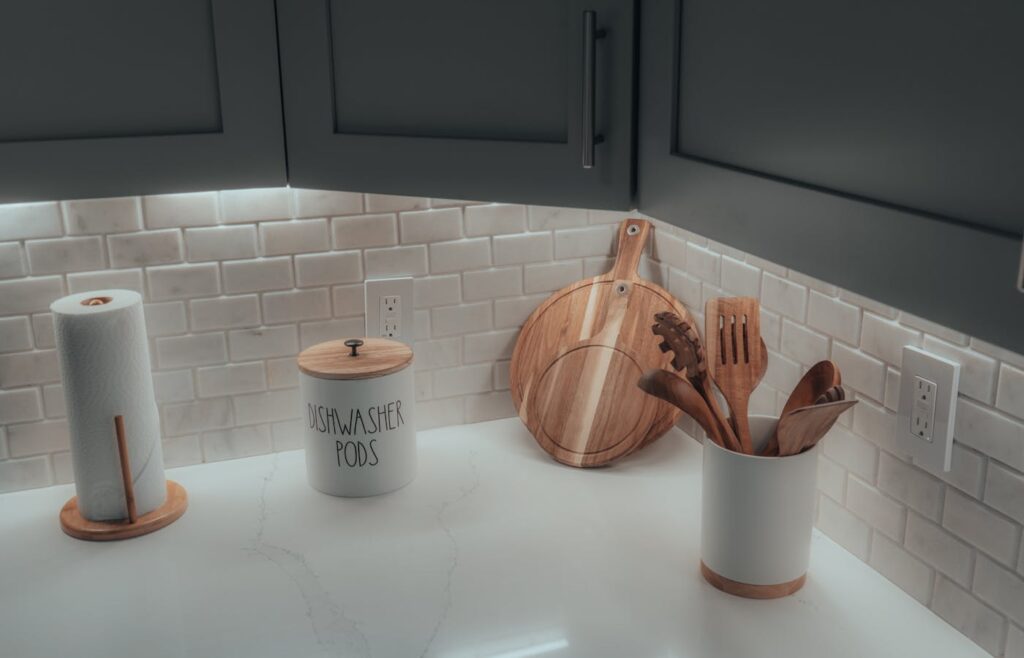
Use containers only when they make the limit obvious. A tray, shallow basket, crock, turntable, or small riser can group related items, but it should not become a permission slip for more clutter. If a tray is crowded enough that wiping around it is annoying, the tray is hiding the problem instead of solving it.
A counter can be useful and still look clear when every visible group has an edge. That edge may be a tray, a corner, a shelf, or a simple rule about what belongs there. Without an edge, daily items spread until the whole counter feels busy.
Move backup items off the counter
Many counters look crowded because they hold both daily items and backup items. One bottle of dish soap may belong near the sink. Three refill bottles do not. A fruit bowl may make sense. Extra bags, unopened snacks, duplicate spices, extra mugs, and bulk pantry overflow usually make the kitchen feel unfinished.
Backups need a different home because they do not help the next task. Store food backups in food-storage zones. Keep cleaning refills separately, upright in their original containers, in a secured location specified by their labels. If cabinet space is tight, store backups by category rather than by room: cleaning refills together, dry goods together, paper products together. That keeps the counter reserved for active use.
Small appliances deserve the same question. If you use the coffee maker daily, it can stay out. If the waffle maker appears once a month, the counter may be too expensive a place for it. A heavy appliance can live in a lower cabinet, pantry shelf, or utility area if the counter is more valuable for prep.
- Keep one active soap bottle out and store refills elsewhere.
- Limit counter appliances to the ones used most days.
- Move unopened food packages into pantry zones.
- Store duplicate mugs, tools, and spices inside cabinets.
- Give mail and paperwork a separate drop zone outside the prep area.
Group daily tools without crowding the surface
Daily tools can stay visible when they are grouped tightly and honestly. A utensil crock near the stove makes sense if those tools are used while cooking. A knife block may work if it does not steal the only prep space. A paper towel holder is useful, but it should not sit in the middle of the most important work area.
Think about reach and mess. Keep cooking tools within convenient reach while respecting the appliance's required clearances; do not set flammable items next to a burner. Items used near the sink can live near the sink. Coffee supplies should not spread into the prep zone unless the kitchen is so small that zones overlap. When items drift away from their task, the counter starts to look random.
Try to keep each visible group low, narrow, or easy to lift. Tall clusters can make a counter feel crowded even when the item count is low. A single crock, one tray, or one board leaning against the backsplash usually looks calmer than five small objects lined across the front edge of the counter.
If a visible item does not support cooking, cleaning, coffee, fruit storage, or a daily habit, question it. Decorative objects can stay, but they need to earn their space by not interrupting the work. In a busy kitchen, one good-looking object often works better than several small ones.
Reset the counter before it becomes storage
Counter organization fails when the reset is too big. Waiting until the whole kitchen looks messy turns a two-minute habit into a weekend project. A short reset keeps the counter from becoming storage again, especially after dinner, grocery unloading, lunch packing, or a busy morning.
Use this reset when the counter starts to feel crowded:
- Throw away trash, wrappers, receipts, and empty packages first.
- Move dishes to the sink or dishwasher instead of stacking them beside the work zone.
- Return pantry items, tools, and refills to their real homes.
- Put paperwork in its own place, not beside food prep.
- Lift trays or crocks and wipe under them quickly.
- Leave one clear prep area open before leaving the kitchen.
The final open area matters. It gives the next cooking task a clean start and makes the whole room look calmer from a distance. Even if one tray, one appliance, and one fruit bowl remain, the counter reads as organized when there is visible breathing room.
Unplug movable appliances before cleaning around them, following their manuals. Leave cords clear of the sink and hot surfaces. A counter organizer must not block cooling openings or make a cord cross the prep area.

Keep this guide handy
An illustrated summary made for JundHaus. Read the guide above for the details and cautions.
Save to Pinterest (opens in a new tab)