How to Organize Paperwork at Home

Paper clutter feels heavier than many other kinds of mess because every sheet seems to ask for a decision. Bills, school notes, receipts, insurance papers, medical forms, manuals, tax documents, coupons, mail, and random printouts can all land in the same pile. Once that pile grows, it becomes easier to avoid than to sort.
For tax, insurance, medical, and legal papers, use official instructions from the relevant agency, provider, or professional before throwing anything away. A tidy folder is not helpful if it removes a document you later need for a claim, return, warranty, or identity issue.
Learning how to organize paperwork at home is really about building a small paper flow. You need a place for papers that need action, a place for papers worth keeping, and a way to remove papers that no longer matter. The system does not have to look impressive. It has to be easy to return to.
Start with one paperwork pile instead of the whole house
Trying to gather every paper in the home can turn a useful task into a full-day project. Start with one visible pile: the kitchen counter, desk, entry table, nightstand, or drawer where paper keeps collecting. A smaller first pass gives you progress without opening every cabinet and file box at once.
Set a timer if that helps. Twenty or thirty minutes is enough to learn what kinds of papers are showing up. You may find unpaid bills, papers to sign, old receipts, sentimental notes, school forms, expired coupons, appointment cards, and documents that belong in long-term storage. The pile tells you what categories your home actually needs.
Do not start by buying a filing cabinet. Start by seeing the paper you already have. Storage should match the decisions, not hide them.
Sort paperwork by decision, not by perfect category
The first sort should be simple: act, keep, scan, recycle, shred, or unsure. This is faster than trying to create perfect folders for every possible topic. Most paper problems come from mixing action items with archive items. A school form that needs a signature should not live beside a ten-year-old appliance manual.
Create small working piles on the table. Action papers need something from you: pay, call, sign, schedule, return, or review. Keep papers are records you may need later. Scan papers can be saved digitally if you trust your backup system. Recycle papers are harmless clutter. Shred papers include sensitive personal or financial information.
The goal of the first sort is movement, not perfection. You can refine categories after the pile is smaller.
Create an action folder for papers that need attention
An action folder is the most important part of a home paperwork system. It keeps live papers from disappearing into storage. Use one folder, tray, clipboard, or magazine file for papers that still need action. Put it somewhere visible enough to use but contained enough that it does not spread across the counter.
Inside the action folder, you can use a few simple labels: pay, sign, call, schedule, return, and waiting. Do not create so many sections that filing becomes a chore. The folder should answer one question quickly: what needs my attention this week?
Review the action folder on a regular day, not only when it overflows. For many homes, once or twice a week is enough. If the folder gets too full, the problem may be delayed decisions, not lack of storage.
- Collect one active paperwork pile.
- Pull out anything that needs action.
- Place active papers in one folder or tray.
- Choose a weekly review day.
- Remove finished papers immediately after the action is done.
Keep long-term documents separate from daily papers
Long-term documents need a calmer home than daily paperwork. This may include tax records, insurance policies, medical records, legal documents, warranties, vehicle papers, home records, pet records, school records, and important receipts. These papers do not need to be touched every day, so they should not compete with the action folder.
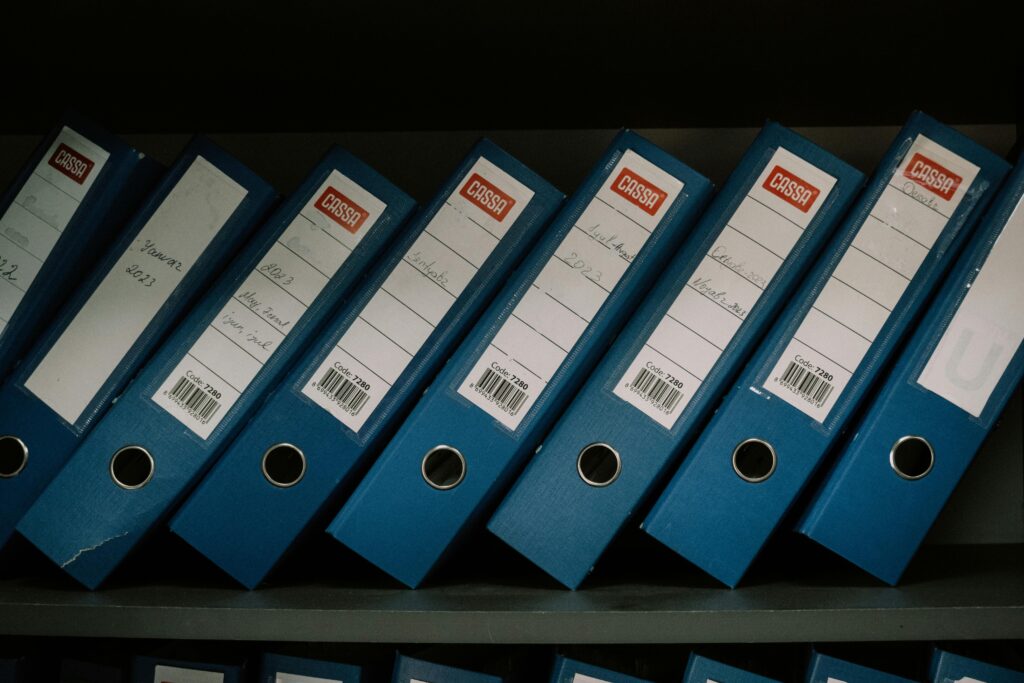
Use a file box, binder, cabinet, or accordion folder depending on how much paper you keep. The container matters less than the separation. Archive documents should be easy to find when needed, but not so visible that they invite random mail to join them.
If a document is hard to replace, consider keeping it in a safer location than an ordinary desk drawer. Birth certificates, passports, titles, and legal documents may need a fire-resistant box or another secure storage choice. Keep copies where useful, but protect originals.
Label folders in everyday language
Labels should match the words your household naturally uses. If you would never say “automotive records,” call the folder “Car.” If “health” feels clearer than “medical,” use that. A paperwork system fails when labels are too clever to remember during a busy week.
Keep categories broad at first. Bills, taxes, health, home, car, school, pets, work, warranties, and personal records may be enough. You can split a folder later if it gets crowded. Starting with too many tiny categories makes every paper feel like a filing test.
Color can help, but it is optional. Clear labels and consistent placement matter more. Put the most-used folders near the front. Store rarely used records farther back. The system should make the next paper easier, not just make the file box look tidy once. When the categories stay clear, a decluttering checklist can separate true clutter from items that simply need a better home.
Build a mail routine before paper reaches the pile
Paperwork gets easier when fewer papers enter the pile. Open mail near the recycling bin or shredder if possible. Recycle envelopes, flyers, expired coupons, and inserts right away. Put action items into the action folder. Put long-term documents into a temporary holding spot if you cannot file them immediately.
Choose one landing spot for incoming paper. This might be a wall pocket, tray, basket, or small inbox near the entry. Avoid letting mail land in three rooms. Multiple landing spots create multiple forgotten piles, and each one starts asking for its own cleanup session.
Digital statements can reduce paper, but only if you actually know where to find them later. If switching to paperless makes bills easier to miss, keep a reminder system before canceling paper completely. Less paper is useful only when the information stays accessible.
- Open mail near recycling when possible.
- Shred sensitive papers you do not need.
- Move bills and forms to the action folder.
- File keeper documents during the weekly reset.
- Stop mail from spreading to several rooms.
Decide what to scan and what to keep on paper
Scanning can help, but it should not become another unfinished project. Start with papers that are useful to access digitally: receipts for returns, school schedules, pet vaccination records, home inventory notes, or documents you often need to email. Use clear file names so you can find them later.
Some papers are better kept physically, especially originals, signed legal documents, vehicle titles, birth certificates, passports, and records where the original matters. When in doubt, check the requirement before discarding an original. A scan is convenient, but it is not always a replacement.
Digital organization needs its own routine too. Put scanned documents into labeled folders and back them up. A desktop full of mystery PDFs is just paper clutter wearing a different costume. Scan only what makes the system easier.
Label scanned files with the year, topic, and action, such as “2026 car insurance renewal” or “2025 appliance receipt.” That small naming habit prevents the digital folder from becoming a second paper pile.
Reset the paperwork system before it gets dramatic
The best paperwork system is the one you can reset quickly. Once a week, empty the landing tray, review the action folder, file keeper documents, shred sensitive discards, and remove paper that no longer matters. This reset can take ten minutes when the system is small.
If the reset keeps failing, make it easier. Use fewer folders, move the inbox closer to where mail enters, keep the shredder accessible, or reduce the number of papers you keep. The system should support normal energy, not depend on a rare burst of motivation.
Organizing paperwork at home is not about creating a perfect archive. It is about reducing the daily question marks. Give active papers one home, important records another, and incoming mail a clear path. When every paper has a next step, the pile loses most of its power.