Laundry Room Storage Ideas for Tight Spaces
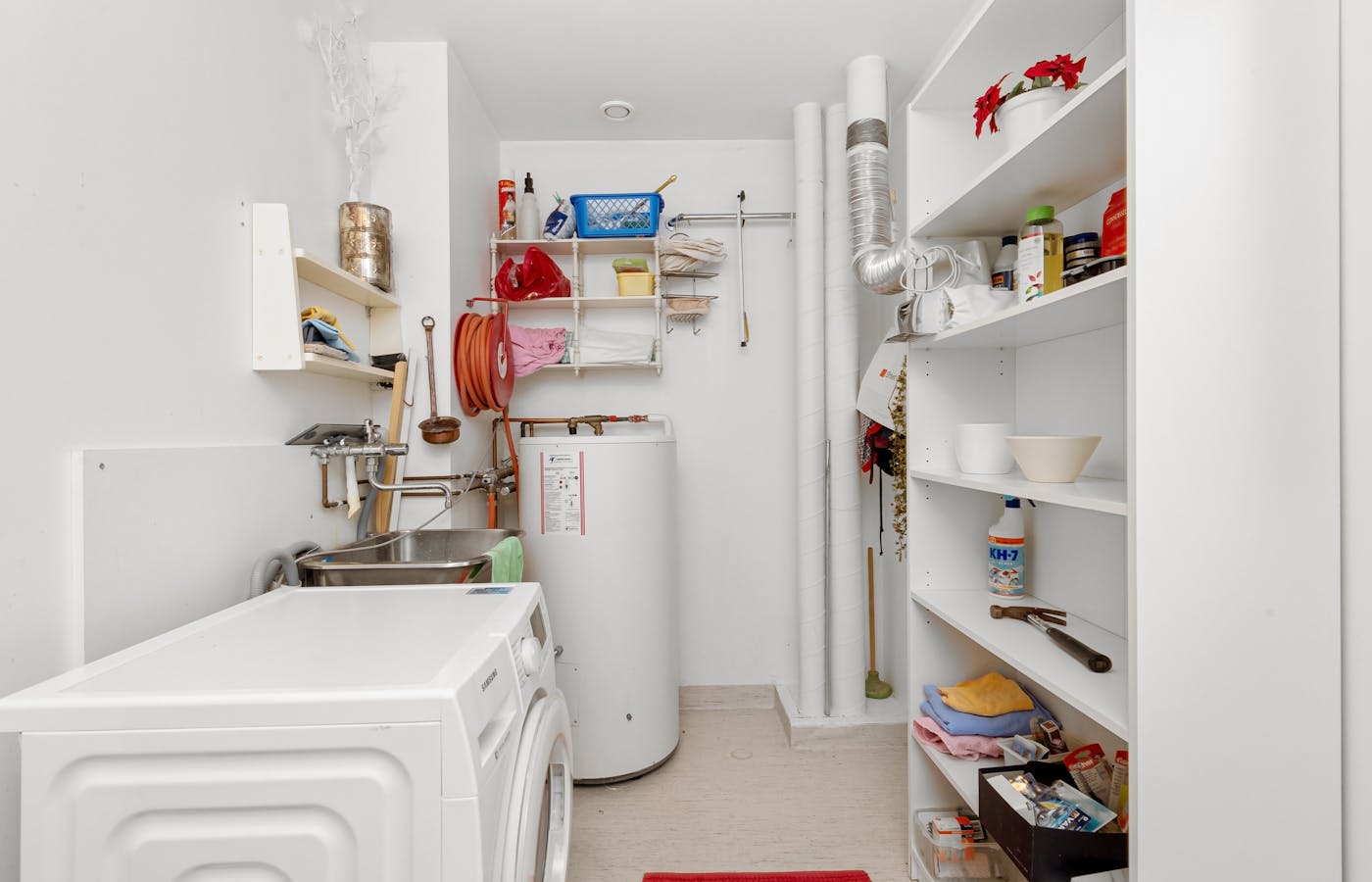
A tight laundry room can become messy faster than almost any other utility space. Detergent lands on the washer, clean towels wait in a basket, hang-dry clothes steal the walkway, and small supplies disappear behind bottles. Laundry room storage ideas for small spaces work best when they support the order you actually do laundry in.
The goal is not to make the room look staged. The goal is to make washing, drying, folding, and putting away feel less cramped. In a small space, every shelf, hook, basket, and cabinet needs a job. If an item does not help the next load move forward, it probably needs a different home.
Start by storing laundry supplies where your hands already reach for them. That one decision makes the room easier before you buy another organizer.
Map the laundry steps before adding storage
Small laundry areas often fail because storage is added wherever there is a blank spot. A shelf goes up, a basket gets tucked into a corner, and a hook lands behind the door. Those choices may look useful, but they can still interrupt the way laundry moves through the room.
Walk through one normal load first. Notice where dirty clothes arrive, where detergent is used, where wet clothes wait, where hang-dry pieces go, where clean laundry gets folded, and where empty baskets sit. The best storage locations are usually found in that sequence, not in a catalog photo.
If the room is extremely narrow, protect the walkway before anything else. Storage that blocks the washer door, dryer door, sink, cabinet, or door swing will become annoying quickly. A tight laundry room feels larger when the main path stays clear.
Wall space should hold the weekly supplies
Walls are valuable in a small laundry room because floor space is usually already taken by machines, baskets, or a door. A shallow shelf above the washer, a cabinet over the dryer, or a narrow rail with hooks can hold the items that are used every week without crowding the work surface.
Keep the everyday supplies visible but controlled. Detergent, stain remover, dryer sheets, wool dryer balls, mesh bags, and clothespins can live together near the machines. Bulk refills, extra paper goods, and rarely used cleaners should go higher or somewhere else, because they do not need the easiest reach.
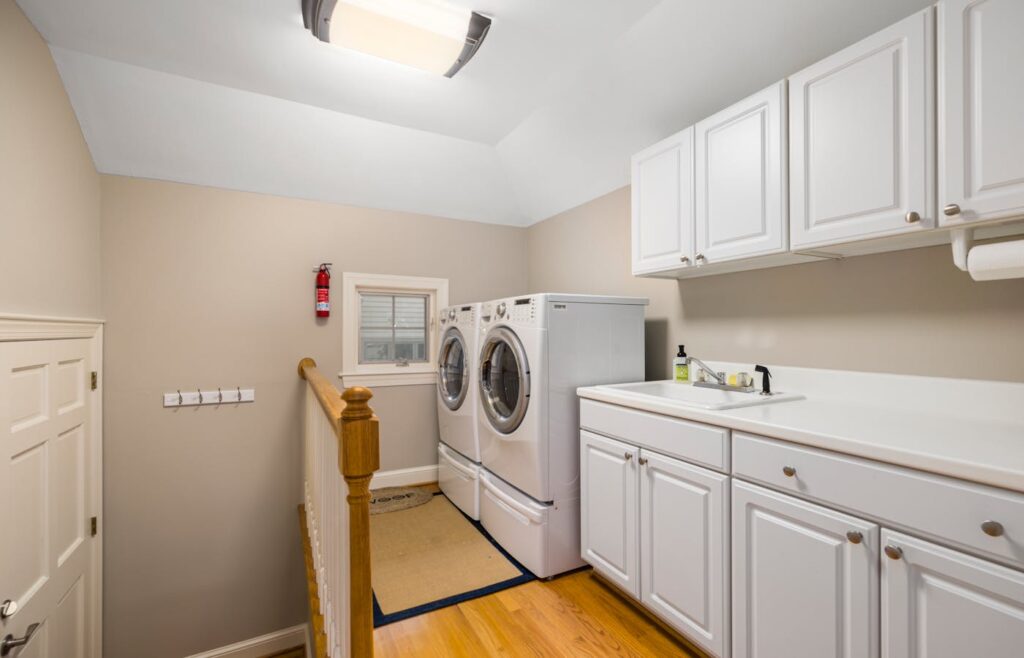
Depth matters more than people think. A deep shelf in a narrow room can make the space feel tighter and hide items in the back. Shallow storage keeps labels visible and reduces the chance that old bottles collect dust behind the current ones.
Choose baskets that match the room, not the dream routine
Baskets can solve laundry clutter or create more of it. In a tight space, oversized baskets may block doors and make the room feel full even when laundry is under control. Very small baskets may overflow before a normal load is ready. The right size depends on the actual laundry volume and where the basket sits between loads.
One or two reliable baskets are often better than several decorative bins. A dirty-clothes basket, a clean-clothes basket, and a small container for lost socks may be enough. If the room has no floor space, consider a slim rolling hamper, a wall-mounted bag, or a basket that slides under a shelf.
- Pick baskets that can move easily through the doorway.
- Use labels only when several people share the laundry system.
- Keep one small spot for socks, lint rollers, and pocket finds.
- Avoid stacking heavy baskets where they must be lifted often.
- Choose wipeable baskets if damp towels often pass through the room.
The best basket is the one that gets used without needing a second decision.
Give hang-dry clothes a planned landing spot
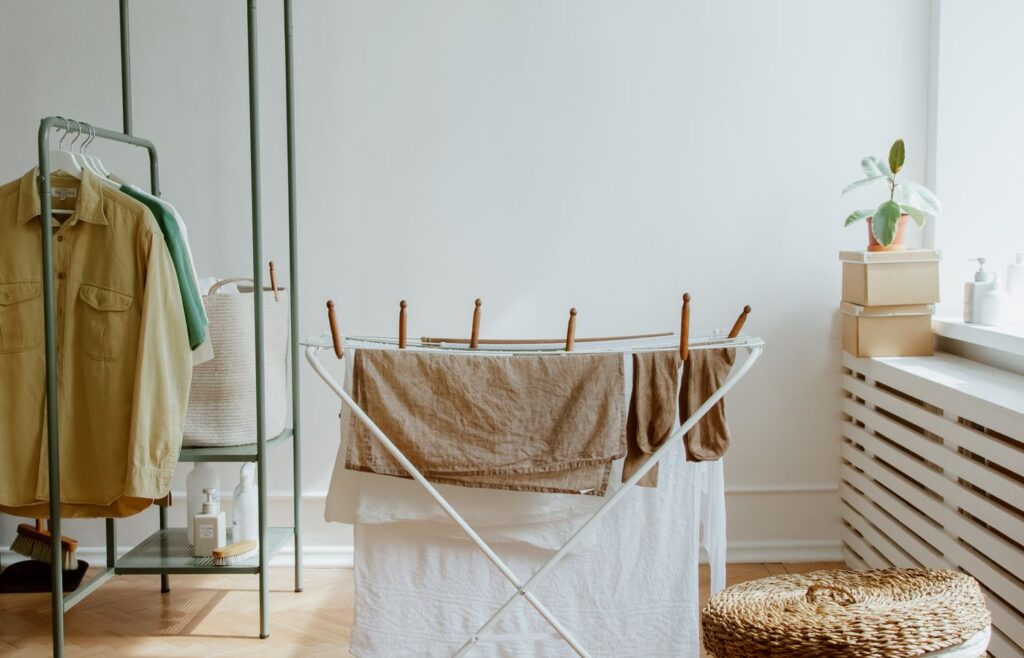
Hang-dry clothes are the reason many tight laundry rooms feel chaotic. Wet shirts hang from cabinet knobs, delicate items cover the washer lid, and a drying rack blocks the door. A planned drying zone keeps those pieces from taking over the room every time a load finishes.
If floor space is limited, look at folding wall racks, ceiling-mounted rods, over-door hooks, or a collapsible rack that has a clear storage spot when not in use. The important detail is the second half of the system: where the drying rack goes after the clothes are dry. Small-space organization works better when create a storage system that lasts keeps storage useful without making the room feel crowded.
A small rod above the washer can work well for shirts on hangers, but it should not interfere with cabinet doors or the washer lid. If the laundry room is also a hallway or mudroom, choose drying storage that folds flat so the walkway returns to normal between loads.
Keep cleaning supplies separate from laundry supplies
Laundry rooms often become storage rooms for every cleaner in the house. That can work if there is enough cabinet space, but in a tight room it usually creates crowded shelves and confusing bottles. Laundry supplies should have the easiest reach; general cleaning supplies can sit higher, lower, or in a different room if they are not part of the laundry routine.
Safety matters too. Strong cleaners, pods, bleach, and stain products should be stored where children and pets cannot reach them. If supplies are under a sink or behind a low door, use a safer latch or move the risky items higher. Small rooms make it tempting to use every inch, but access still needs to be sensible. Small-space organization works better when under-bed storage keeps storage useful without making the room feel crowded.
Convenient storage should not make dangerous products easier to grab by accident. A tidy shelf only works if the contents are stored with the household in mind.
Narrow gaps work best with one assigned job
The gaps beside appliances, between a wall and cabinet, or next to a utility sink can be useful when they are assigned a specific job. A slim rolling cart can hold detergent refills, lint rollers, or cleaning cloths. A narrow hook strip can hold a small broom, dustpan, or laundry bag. A gap that has no job usually becomes a place for random items to vanish.
Measure before buying anything for these tight spots. Appliance doors, hoses, vents, and wall trim can reduce the usable space more than expected. A cart that fits in width but blocks a dryer door is not a solution. The storage should slide out easily and return without scraping walls or pinching hoses.
In a small laundry room, hidden storage is only helpful when you can pull it out without moving three other things first.
Create a quick reset after each laundry day
Storage systems survive when there is a reset habit. Laundry rooms collect lint, wrappers, coins, hangers, socks, empty bottles, and folded clothes waiting for someone to carry them away. A five-minute reset keeps the tight space from turning into a holding area for the rest of the house.
Use the end of laundry day as the reset point. Toss lint, return stain remover to its shelf, put empty hangers back on the rod, move clean clothes out of the room, and check whether the drying rack needs to be folded away. If a basket still has clean laundry in it the next day, the storage problem may actually be a put-away problem.
This is also the moment to notice what keeps landing in the wrong place. If dryer sheets are always on top of the machine, they need a reachable container. If clean towels sit in the room for days, they may need a basket near the bathroom instead of a better laundry shelf.
Build a tight laundry storage setup in stages
Trying to fix a small laundry room in one shopping trip often creates too many containers and not enough clarity. Start with the biggest friction point, then add storage only where the routine proves it is needed. A room that handles detergent, baskets, drying, and trash smoothly will already feel more organized.
Use this staged setup before buying several organizers:
- Clear the washer, dryer, floor, and sink area so the room can be judged honestly.
- Group laundry supplies, cleaning supplies, hang-dry tools, baskets, and random extras.
- Move rarely used or unrelated items out of the easiest reach zone.
- Add one shelf, basket, hook, or cart for the most repeated problem.
- Run laundry for one week before deciding what else is missing.
- Adjust labels, basket placement, or drying storage after real use.
Laundry room storage ideas for tight spaces work when they respect the room’s limits. Use the walls, protect the walkway, choose baskets that fit, plan for drying, separate risky cleaners, and reset the space after laundry day. The room may still be small, but it can stop feeling like a storage fight every time a load starts.