How to Create a Bathroom Cleaning Kit That Saves Time
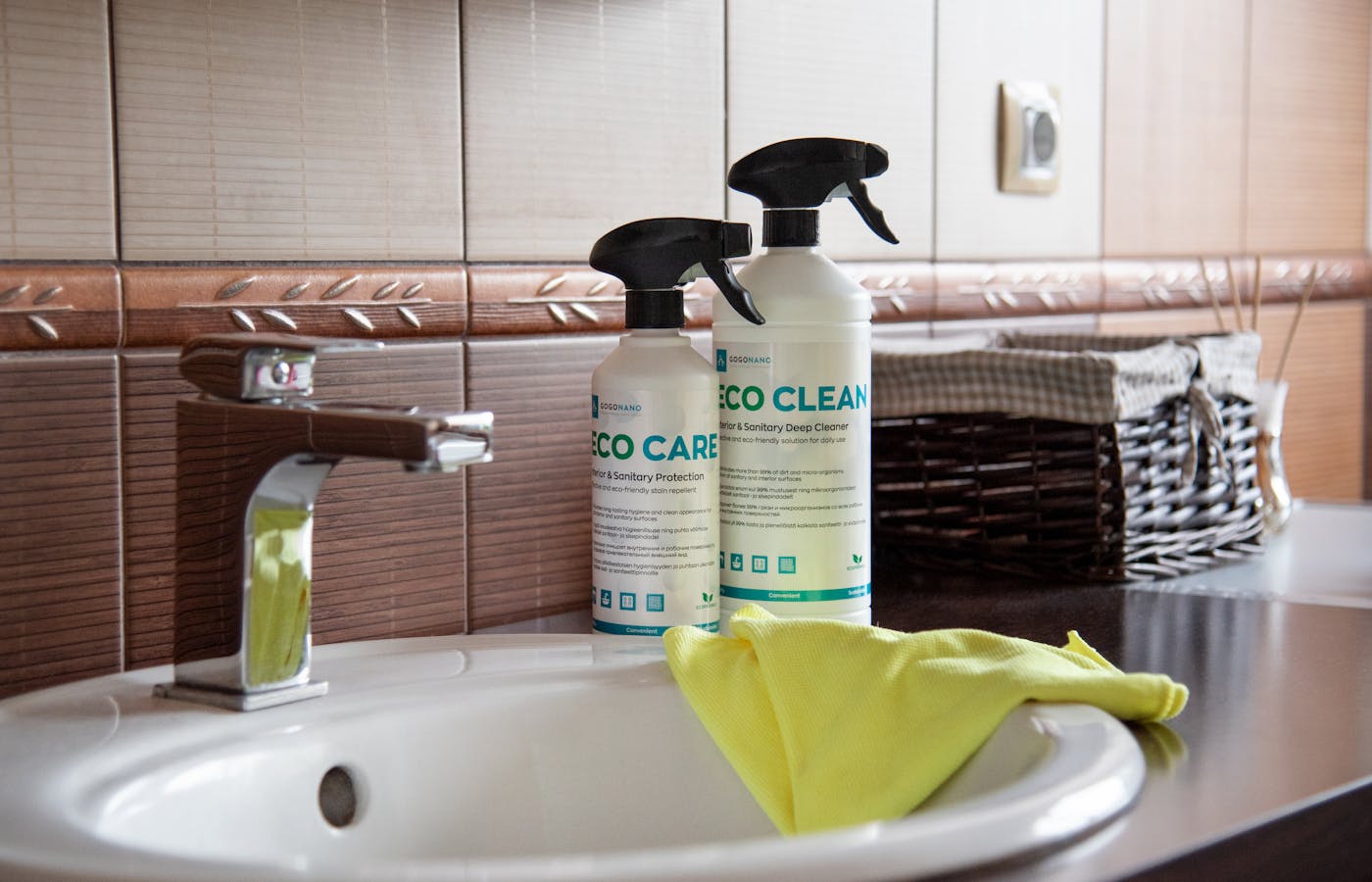
A bathroom gets easier to clean when the supplies are already together. Without a kit, a quick wipe can turn into a search through the laundry room, kitchen sink cabinet, closet shelf, and half-empty bottles under the vanity. Learning how to create a bathroom cleaning kit that saves time starts with putting the right items in one place.
Do not turn the kit into every cleaner in the house. A useful bathroom kit is small, clear, and task-based. It should help you clean the sink, mirror, toilet, shower, and floor touch points without hauling a heavy bin or guessing which cloth belongs where.
A good bathroom cleaning kit removes the delay between noticing a mess and handling it.
Product labels matter more in bathrooms than many people realize. Ventilation, dwell time, surface limits, and warnings about mixing cleaners should shape what goes in the kit, especially when bleach, disinfectants, glass cleaner, or acidic products are involved.
Choose a kit that matches the bathroom routine
Start with the way the bathroom is actually used. A guest bath may need a compact kit for mirror spots, sink splashes, toilet touch-ups, and hand towel resets. A family bathroom may need sturdier supplies for toothpaste, hair, soap film, water marks, and floor drips. A shower-heavy bathroom may need a different mix than a powder room with no tub.
Pick a container that fits the routine. A handled caddy works well when supplies move from one bathroom to another. A shallow bin can sit under a sink when the kit stays in one room. A small bucket may be useful if you clean floors often. The container should be easy to lift with one hand, easy to wipe, and large enough that bottles stand upright without tipping.
A bathroom cleaning kit saves time only if it stays easy to use. If the caddy is packed too tightly, you will stop returning items to it. If the bin is buried behind backups, you will avoid pulling it out. Leave enough space for a cloth, gloves, brush, and the products you use most often.
The best kit is the one you can grab without rearranging a cabinet first.
Limit the products to what the bathroom needs
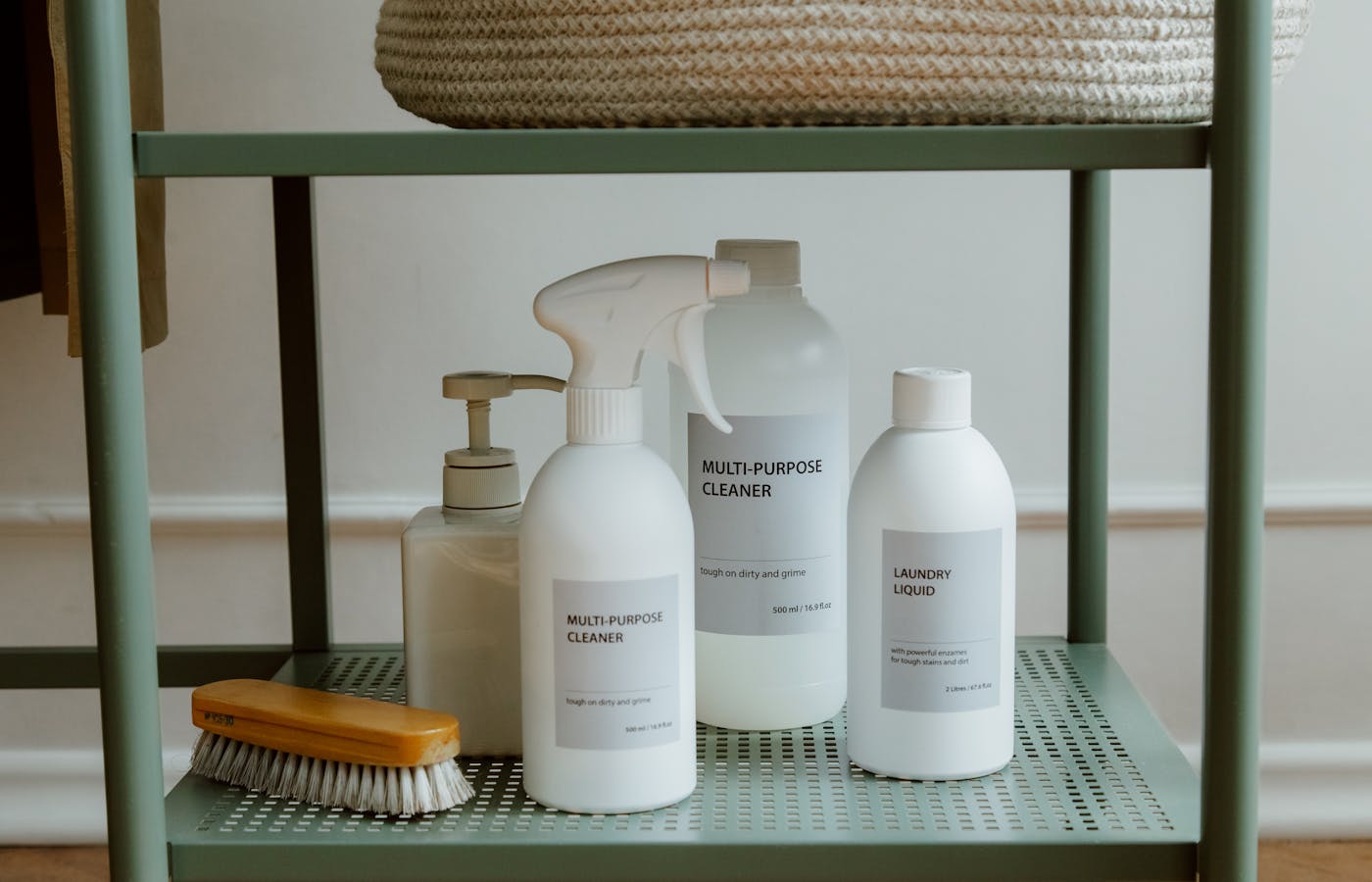
Too many bottles slow the routine down. Most bathrooms do not need six specialty sprays in the daily kit. Keep the core set focused on surfaces, glass, toilet cleaning, and any shower or tub issue that appears regularly. Store backups and rarely used products somewhere else so the kit stays light.
Check labels before combining routines. Some products should not be mixed on the same surface or used immediately after another cleaner. If a cleaner needs dwell time, put that note on your routine or choose a moment when the bathroom can sit undisturbed. If ventilation matters, keep the fan or window habit attached to the kit.
| Kit item | Useful for | Time-saving detail |
|---|---|---|
| All-purpose bathroom spray | Sink, counter, exterior surfaces | Handles most quick wipes |
| Glass cloth or glass cleaner | Mirror and shiny fixtures | Prevents switching tools mid-clean |
| Toilet brush and cleaner | Bowl cleaning | Keeps toilet work separate |
| Microfiber cloths | Drying, wiping, polishing | Reusable and easy to color-code |
| Small scrub brush | Grout edges and faucet bases | Targets buildup without a long search |
Keep the kit honest. If an item sits unused for a month, move it out. If you reach for the same missing item every week, add it.
Separate tools by clean, dirty, wet, and dry jobs
Bathroom cleaning gets faster when each tool has a clear role. Use one cloth for mirrors, another for counters, and a separate tool for toilet surfaces. This keeps the routine more sanitary and prevents linty, damp, or product-heavy cloths from being used in the wrong spot. Color coding helps if more than one person cleans. Bathroom routines stay easier when clean bathroom grout without harsh scrubbing routine keeps small-space storage under control.
Do not put wet tools back into a closed caddy without a plan. Damp cloths can smell, brushes can drip, and gloves can make everything in the kit feel unpleasant. Add a washable mesh bag, a small hanging loop, or a separate spot for used cloths. The kit should include clean supplies, while dirty items move toward laundry or drying.
- Keep toilet tools separate from sink and mirror tools.
- Use one glass cloth only for mirrors and chrome details.
- Store clean cloths dry, folded, and easy to count.
- Move used cloths to laundry after each cleaning round.
- Let brushes and gloves dry before closing them in storage.
This separation also makes the kit easier to refill. You can see when clean cloths are low, when gloves are worn out, or when a brush needs replacing. A kit that hides dirty tools inside the same container tends to get avoided.
Place the kit where cleaning actually happens
Location decides whether the kit saves time. If the bathroom cleaning kit is stored three rooms away, it becomes a deep-clean supply box instead of a quick-reset tool. The best spot is close enough that a toothpaste splash, mirror spot, or counter spill can be handled immediately. Under the sink, on a laundry shelf near the bathroom, or in a nearby linen closet can all work.
Safety still matters. If children or pets can reach the area, choose higher storage, locks, or a separate secure shelf for cleaners. Keep labels visible, bottles upright, and products in their original containers when possible. A pretty basket is not worth it if it hides warnings, leaks, or makes the kit easy for the wrong person to grab.
The kit should be close enough for speed and controlled enough for safety.
Think about the path from storage to use. A caddy that bumps into plumbing every time you pull it out will not stay neat. A shelf that forces bottles to lie sideways invites leaks. A narrow bin with a handle can often solve those small annoyances without adding more storage furniture. That cleaning rhythm is easier to keep when safe cleaning-supply storage handles another detail people usually postpone.
Build refill checks into the cleaning rhythm
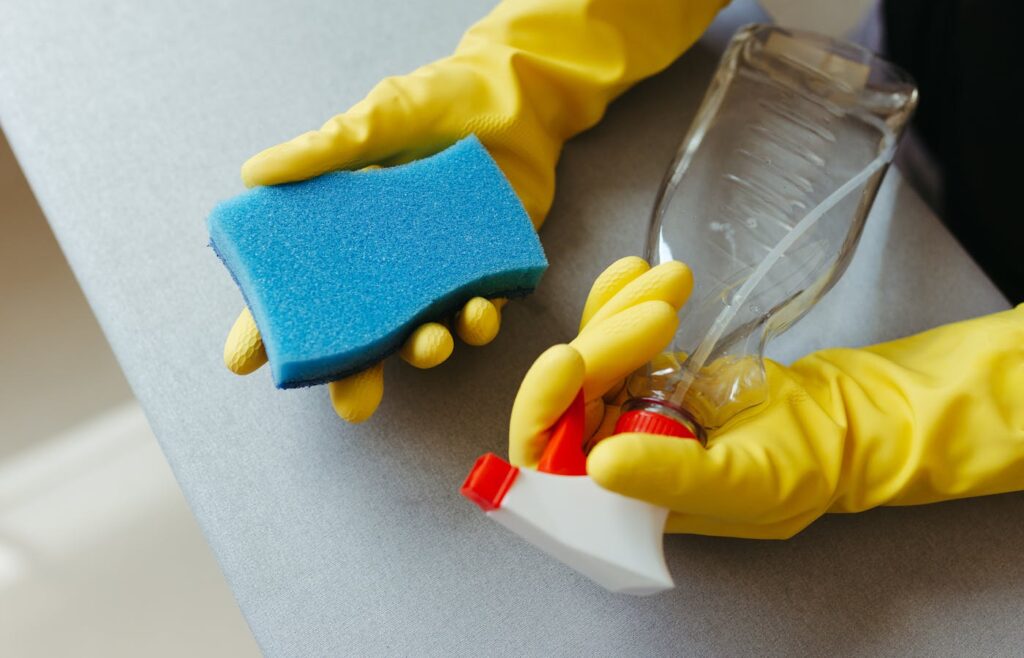
A bathroom kit fails when it looks ready but is missing the thing you need. Empty sprays, one remaining cloth, cracked gloves, and a worn sponge all slow the next cleaning session. Add a quick refill check to the end of the routine, when you already have the kit in hand.
Keep backups separate from the working kit. The kit should hold the current bottle and current tools. Backups can live on a higher shelf, laundry cabinet, or labeled bin. This prevents the caddy from becoming heavy and crowded while still making refills easy. If you use concentrated products, keep measuring tools and dilution notes stored safely with the product, not loose in the bathroom kit.
- Refill sprays before they are completely empty.
- Replace sponges before they crumble or smell.
- Wash microfiber cloths after bathroom use.
- Check gloves for tears around the fingers.
- Restock trash bags, toilet paper, or hand soap only if they belong in the same routine.
A small label inside the caddy can list the standard items. That way the kit can be reset quickly after laundry, shopping, or a larger bathroom cleaning day.
Use a quick reset routine after every bathroom clean
The final habit is what keeps the kit useful. After cleaning, return only dry, clean tools to the caddy. Remove used cloths, close bottles, wipe the outside of any sticky containers, and check whether something is low. This takes a minute, but it saves the next cleaning session from starting with a messy kit.
- Remove used cloths and put them directly in laundry.
- Let gloves, brushes, and damp tools dry in a ventilated spot.
- Wipe bottle bottoms before returning them to the caddy.
- Check spray levels, sponge condition, and cloth count.
- Return the kit to its assigned storage spot.
- Restock one missing item before the next bathroom cleaning day.
Keep the routine small enough to repeat. A bathroom cleaning kit that saves time should not require a second organizing project after every use. The simpler the reset, the more likely the kit will be ready when the sink, mirror, toilet, or shower needs attention again.
Once the kit has a clear container, limited products, separated tools, safe storage, refill checks, and a fast reset, bathroom cleaning becomes less scattered. You still have to clean, of course, but you no longer have to gather the bathroom supplies from five different places before you begin.