How to Store Cleaning Supplies Safely at Home
Published Updated

I bring a warm, detail-oriented eye to home routines, decluttering ideas, and everyday ways to make a space feel easier to live in.
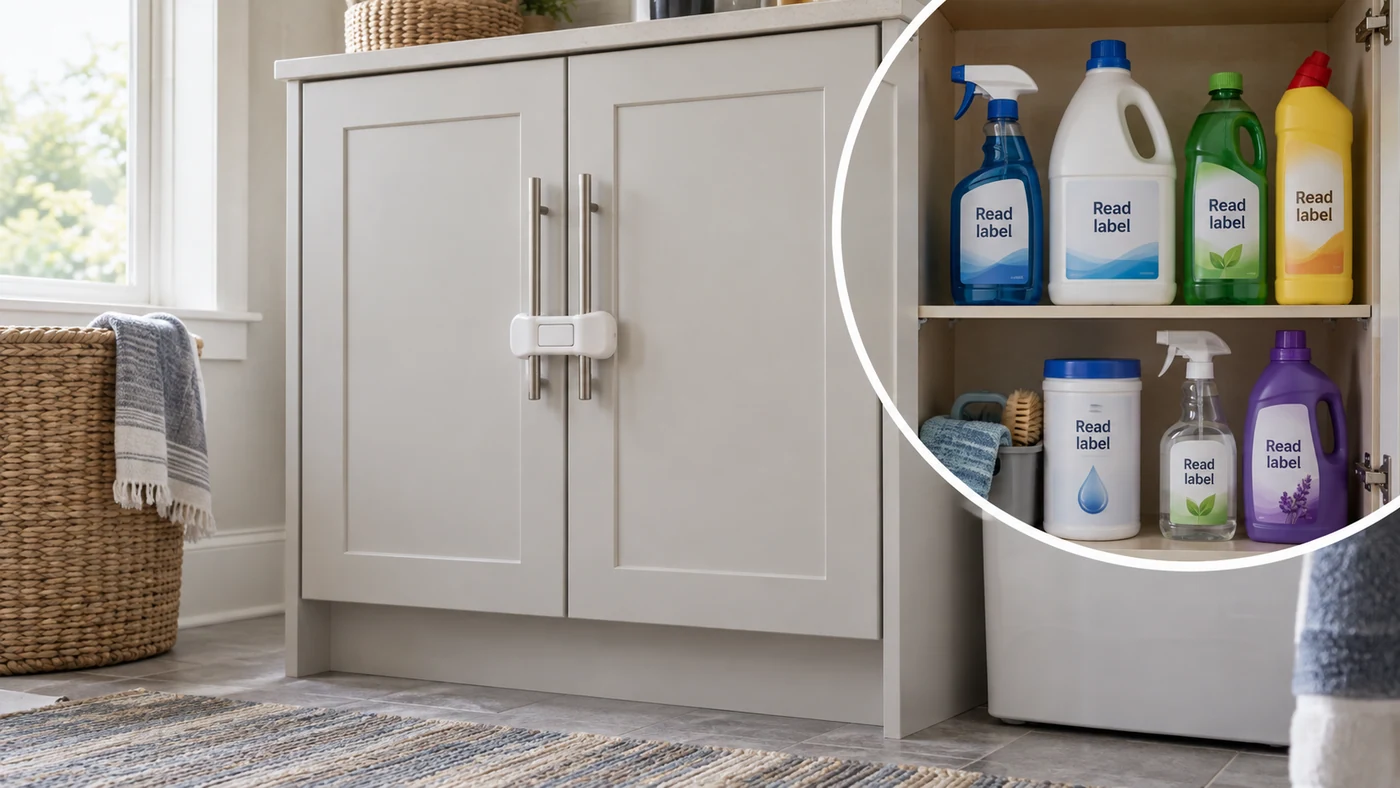
Cleaning supplies need a storage plan that protects people before it organizes bottles. Keep chemicals in their original containers, close the caps, follow each label's storage instructions, and prevent children from opening the storage area. A high shelf helps with visibility, but a locked cabinet or box is a more useful boundary than height alone.
Start with one cabinet, not every supply in the house at once. Check which products belong there, whether the space meets their label requirements, and how you will return them after cleaning. The arrangement should let you remove one bottle without tipping the others or covering their warnings.
Check the storage space before moving products
Read the storage directions on the bottles you already own. Products may have different requirements for temperature, ventilation, sunlight, or separation from other materials. A convenient cabinet is unsuitable if a label says the product needs conditions that cabinet cannot provide.
Keep cleaning chemicals away from food, pet food, dishes, and personal-care supplies. Do not store bottles where leaks can reach those items. Check the base of an under-sink cabinet for moisture and plumbing leaks before adding an organizer. A tray can collect a small drip, but it cannot fix a leaking pipe or make an incompatible location suitable.
Look at access as well as shelf space. A door that stays open while someone gets a cloth defeats the lock. Choose a place you can close and secure immediately, including during a busy cleanup. If someone else cleans the home, show them the storage rule and where the key or latch belongs.
Keep original containers and readable warnings
The original bottle identifies the product and carries its directions, warnings, and first-aid information. Keep it intact. Do not decant cleaners into drink bottles, food containers, decorative jars, or an unlabeled spray bottle to make the shelf match.
The CPSC poison-prevention guidance recommends locked storage out of children's reach and original child-resistant containers. Child-resistant packaging still needs adult supervision and secure storage.
Do not remove a warning label because a household label looks tidier. Put category labels on the shelf or bin instead. If a product's identity or instructions cannot be read, set it aside securely and ask the manufacturer or local waste service how to handle it. Guessing from the bottle's color or smell does not establish what it contains.
Keep products separate where labels require it
Do not combine cleaners, including partially used bottles, to save space. Follow the labels when deciding which products can share a shelf or tray. Separate products whose leaks could come into contact, and keep each bottle upright with its own cap properly closed.
Bleach deserves particular attention around ammonia, acids, and other cleaners. A storage organizer should not encourage you to pour several products into one container or reuse a container that still holds another product's residue. Check refills against the original product instructions rather than assuming similarly named cleaners are interchangeable.
For use as well as storage, the product label controls the method, protective equipment, and surface compatibility. If a spill involves an unknown product or products that may have mixed, keep people and pets away and seek product-specific advice. Do not turn an uncertain chemical spill into an ordinary wipe-down.
Choose trays that leave labels visible
A small washable tray can keep bottles from sliding and make the shelf easier to inspect. Use one that lets the bottles stand upright without being forced together. Check that the container material is compatible with the products it holds; decorative fabric can absorb a leak and conceal residue.
Make the front row small enough that you can see the containers behind it. Put heavier bottles on a stable, reachable shelf within the secured area. Avoid an arrangement that requires you to lift a large jug over other bottles whenever you need a cloth.
A small-cabinet storage plan can help you measure usable space around pipes and shelves. Apply the chemical-storage rules first, then choose an organizer that fits the remaining space.
Keep a small kit without leaving it accessible
A caddy can hold the supplies for one cleaning job, but it needs a secure home between jobs. Carry only what the room needs and keep children and pets away from the kit while you use it. Return the chemicals to their locked storage as soon as the task is finished.
Keep dry cloths, brushes, and other nonchemical tools separate if that makes them easier to reach. Wet cloths and mop heads need somewhere appropriate to dry; placing them against chemical bottles makes the shelf harder to inspect. Keep unopened backups in the same controlled conditions their labels require.
Before buying a refill, check what is open. A short list on the inside of the cabinet door can show which product is running low without requiring more categories or a matching set of containers.
Check the cabinet when you return the kit
- Close each cap and stand the bottle upright.
- Check for leaks or damaged containers without mixing or handling unknown residue.
- Leave the original product name and warnings visible.
- Return backups to the storage conditions stated on their labels.
- Close and lock the storage area before leaving it.
If products are damaged, unwanted, or no longer identifiable, follow local disposal instructions. Do not pour them together, down a drain, or into household rubbish without checking whether that method is allowed for the specific product.

Keep this guide handy
An illustrated summary made for JundHaus. Read the guide above for the details and cautions.
Save to Pinterest (opens in a new tab)