How to Keep a Kitchen Sink Area Clean and Clutter-Free
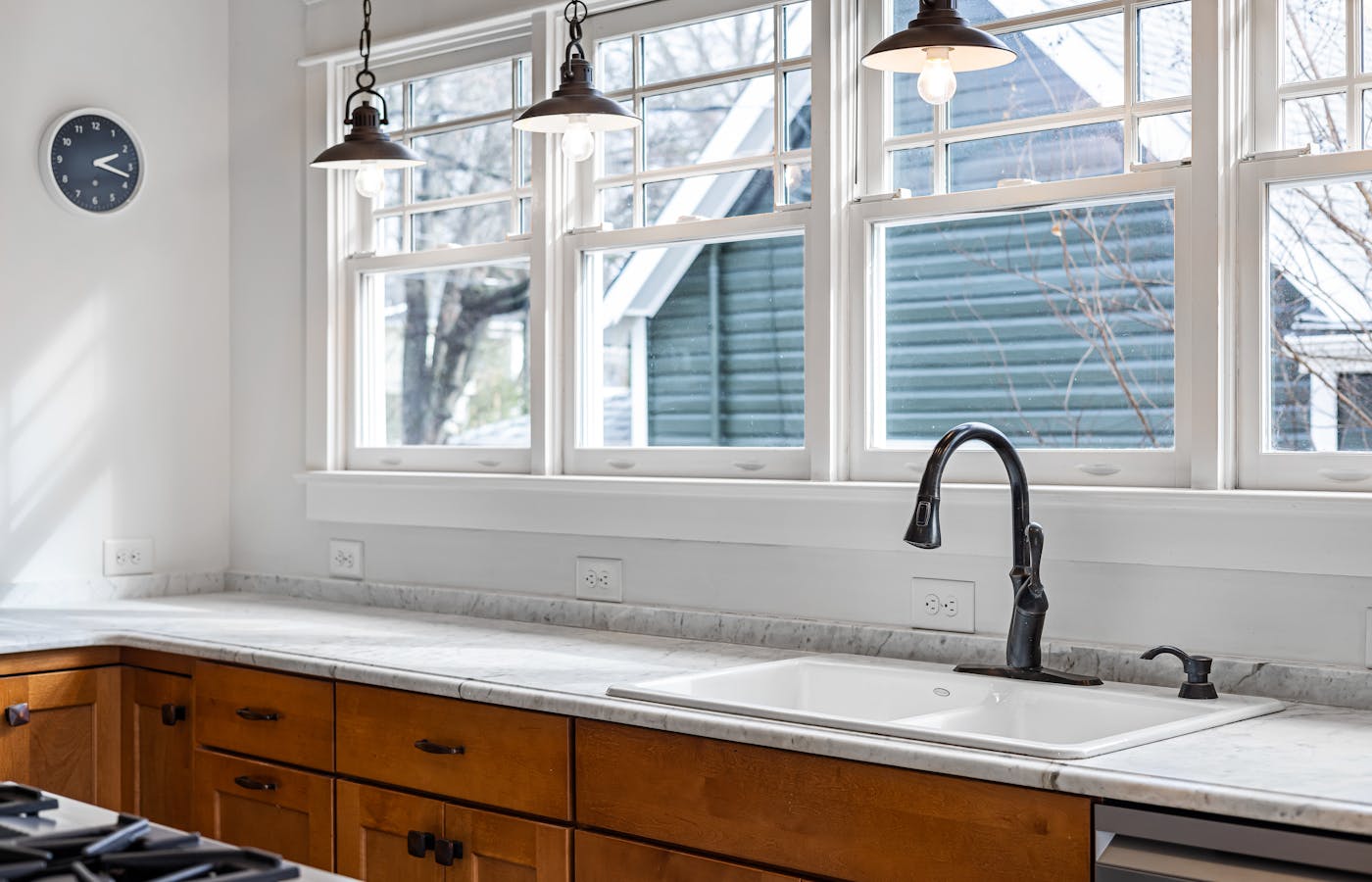
The kitchen sink area collects more household traffic than almost any other counter zone. Dishes arrive there, produce gets rinsed there, coffee cups pause there, cleaning tools sit there, and mail or random items can land beside the faucet when the counter is busy.
Learning how to keep a kitchen sink area clean and clutter-free is mostly about giving that small zone fewer jobs. The sink can handle washing, rinsing, draining, and quick cleanup, but it should not become storage for every bottle, sponge, bowl, and unfinished task in the kitchen.
A clean sink area does not need to look empty all day. It needs clear rules for what belongs near the faucet, where wet items dry, where dishes move next, and how the counter gets reset before grime has time to build.
Decide what actually belongs beside the kitchen sink
The first step is choosing the permanent residents of the sink area. Most kitchens need dish soap, hand soap, one sponge or brush, and maybe a small tray for those wet items. Everything else should earn its place. Extra cleaners, duplicate scrubbers, decorative bottles, food containers, grocery bags, and random cups often make the counter look busy before any real mess happens.
Stand at the sink and look at what you touch during a normal meal cleanup. Those items deserve the most convenient spot. Items used weekly can move under the sink, into a cabinet, or to a cleaning caddy. Items used rarely should not sit beside running water every day.
A small tray is useful because it gives wet tools a boundary. Without a boundary, the sponge, brush, soap, and bottle tend to spread outward across the counter. A tray also makes it easier to lift everything at once when wiping the surface underneath.
Keep the sink edge clear enough that you can wipe it in one pass. If wiping requires moving six objects, the area has too many permanent items. A tidy sink zone should make cleaning easier, not add a small obstacle course before every wipe-down.
The fewer items that live beside the faucet, the faster the area can return to clean.
Create a dish flow that keeps piles from forming
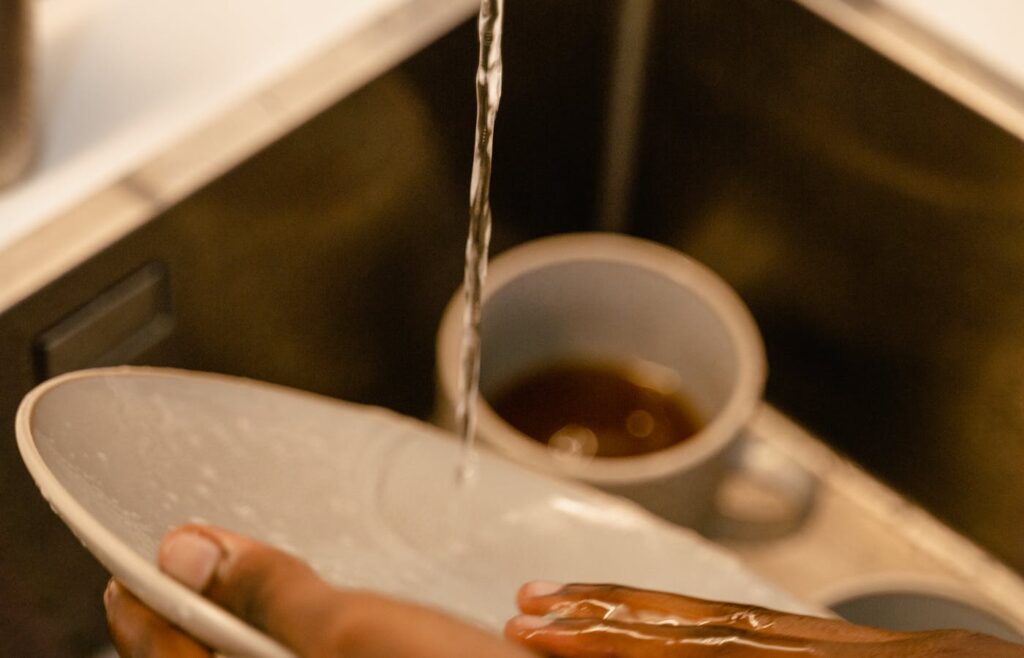
Sink clutter often starts as a dish traffic problem. A glass sits in the basin, then a plate joins it, then a pan blocks the drain, and soon the whole sink looks harder to deal with than it really is. A dish flow gives each item a next step instead of letting everything wait in the same place.
Choose a simple order for dirty dishes: scrape, rinse if needed, load the dishwasher or stack by type, then wash hand-wash items separately. If the household does not have a dishwasher, use one side of the sink or one basin for soaking and another area for washing. The important part is avoiding one mixed pile where fragile glasses, greasy pans, and utensils all compete for space.
A counter can stay calmer when the sink is treated as a pass-through zone, not a parking lot. Even if dishes cannot be washed immediately, stacking plates together and placing utensils in one cup or bowl keeps the mess contained.
Here is a practical dish flow for a busy sink area:
| Dish stage | Where it goes | Why it helps |
|---|---|---|
| Scraps | Trash, compost, or disposal | Prevents food from spreading in the basin |
| Dishwasher items | Directly into the dishwasher | Reduces counter stacking |
| Hand-wash items | One side of sink or one tub | Keeps fragile pieces separate |
| Clean wet items | Drying rack or towel zone | Stops clean dishes from blocking the faucet |
When every dish has a likely destination, the sink area becomes easier to clear in short bursts.
Keep drying space controlled and temporary
Drying space is necessary, but it can quickly become the reason the sink area always looks cluttered. A dish rack, towel, or mat should serve as a temporary landing place for clean wet items. It should not become long-term open storage for mugs, containers, pans, and utensils that never return to cabinets. Kitchen storage works better when bathroom-counter routine keeps daily-use items from drifting back onto open surfaces.
Choose drying space based on how your kitchen actually works. A full rack may make sense for a household that hand-washes often. A narrow mat may be enough if only knives, pans, or delicate glasses skip the dishwasher. In a very small kitchen, a roll-up rack over the sink can add drying space without taking over the counter all day.
Set a regular emptying point. That might be after breakfast, before dinner, or during the evening reset. The exact time matters less than the habit of returning dry items before the next load arrives. If the rack is already full before dishes are washed, new dishes will spread into the sink and surrounding counter.
Useful drying-space boundaries include:
- Use one rack or one mat instead of several scattered towels.
- Return dry dishes before starting a new round of washing.
- Keep large pans drying separately so they do not crush smaller items.
- Hang the dish towel where it can dry fully between uses.
- Wash or air out the drying mat often so it does not hold odor.
A controlled drying zone makes the counter look intentional even while dishes are still drying.
Store cleaning tools so they can dry without spreading clutter
Sponges, brushes, cloths, and scrub pads need air. When they sit flat in a puddle, they can smell, stain the counter, or make the sink area feel dirty even after the dishes are done. Good tool storage keeps them visible enough to use, contained enough to look tidy, and dry enough to stay fresh.
Use one small holder, suction cup caddy, tray, or sink-side organizer for the tools used daily. Avoid keeping every specialty brush at the sink. Bottle brushes, grill scrubbers, extra sponges, and backup cloths can live in a cabinet or under-sink bin until needed.
Cloths should have a place to hang. A damp cloth folded beside the faucet usually becomes a smell problem and a visual clutter problem. Hang it over a bar, hook, cabinet edge, or laundry area so it can dry before washing.
A sink area feels cleaner when wet tools have a dry home.
Replace tired sponges, split brushes, stained scrubbers, and sour-smelling cloths before they make the whole area feel neglected. A simple weekly check is usually enough. Cleaning tools should help the kitchen look cleaner, not become the mess that draws attention.
Protect the under-sink area from becoming hidden clutter
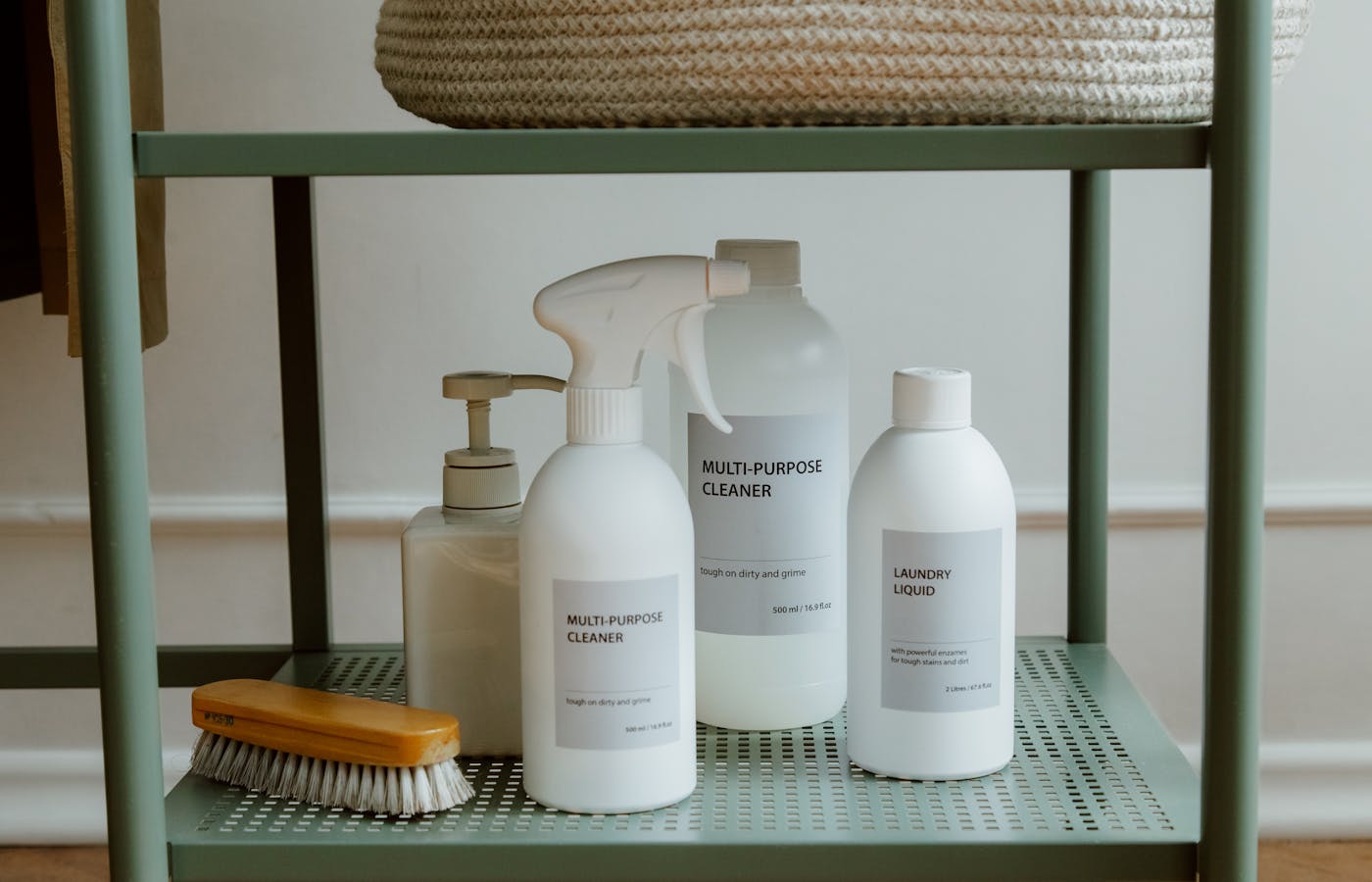
A clutter-free sink area includes the cabinet below it. The under-sink space often becomes the place where extra sprays, bags, dishwasher tablets, brushes, trash liners, and mystery bottles disappear. When that area is crowded, people leave items on the counter because putting them away is annoying.
Keep the under-sink area limited to categories that genuinely belong there. Cleaning products, dish supplies, trash bags, and a small caddy can work well. Bulk extras, unrelated tools, pet supplies, and old bottles may need a different storage zone.
Use bins with clear jobs. One bin can hold dishwashing supplies. Another can hold cleaning sprays. A narrow container can hold extra sponges and brushes. The goal is not to fill every inch. The goal is to make it easy to return the item that was just used beside the sink.
Watch for leaks, dampness, and crowding. Under-sink storage sits near pipes, so anything stored there should tolerate occasional moisture or be protected in a bin. Paper towels, cardboard packaging, and fabric items may not be the best fit if the cabinet is humid.
Items that usually do not need to live at the sink include:
- Empty bottles kept just in case.
- Duplicate cleaners that are already stored elsewhere.
- Old scrubbers that were replaced but never thrown away.
- Bulk supplies that block daily products.
- Unrelated hardware, cords, or household catchall items.
When the hidden storage is simple, the visible counter is easier to keep clear.
Use a short reset before the sink area gets out of control
The sink area does not need a deep clean every night, but it does benefit from a short reset. Waiting until the basin is full, the counter is sticky, and the drying rack is crowded makes the job feel bigger. A small routine keeps the area from crossing that line.
Use this evening reset when the kitchen is winding down:
- Move clean dry dishes from the rack or mat to their cabinets.
- Scrape and group any remaining dirty dishes by type.
- Wash or load the items that would smell overnight.
- Rinse the basin and remove food from the drain area.
- Lift the soap tray or tool holder and wipe underneath it.
- Hang damp cloths and set sponges where air can reach them.
- Clear anything from the counter that does not belong near the sink.
This reset can take only a few minutes when the daily zones are already clear. It also makes the next morning easier because the first cup, plate, or breakfast dish is not landing on top of yesterday’s mess.
The sink area stays clean through repeated small decisions: fewer permanent items, a dish flow that keeps piles moving, drying space that gets emptied, tools that can dry, and under-sink storage that is easy to use. Keep the zone simple enough to wipe quickly, and it will be much easier to maintain through real meals, busy mornings, and ordinary kitchen cleanup.