How to Declutter Clothes Without Regret
Clothes are one of the hardest categories to declutter because they are tied to money, body changes, old jobs, past seasons, and imagined future plans. A shirt can be too small, too formal, too worn, or simply not your style anymore, and still make you hesitate. That hesitation is exactly why clothes need a calmer process than a rushed closet purge.
If you want to know how to declutter clothes without regret, the key is to sort by current life first. You are not deciding whether a piece was ever useful. You are deciding whether it still earns space in the closet you open this week.
The goal is not to own fewer clothes at any cost. The goal is to make daily dressing easier while keeping the pieces that fit, function, and still feel like yours.
Start decluttering clothes by category, not by closet
Pulling every piece of clothing onto the bed can look productive, but it can also create pressure fast. If you run out of time, you may end with a bigger mess and a pile of half-made decisions. Beginners usually do better with one clothing category at a time: socks, pajamas, workout clothes, coats, jeans, dresses, or one section of hanging clothes.
Category sorting lets you compare similar items. It is easier to see that you have twelve old T-shirts, five black cardigans, or three pairs of jeans you never reach for when they are grouped together. It also makes the project easier to pause. If you only finish pajamas today, that still counts.
Choose a category that feels low-risk for the first round. Starting with sentimental clothing or expensive items can slow everything down before you build confidence.
Use fit and comfort as the first clothing filter
Fit is not a moral issue; it is a practical one. Clothes that pinch, slide, scratch, twist, gap, or make you adjust them all day are not helping your daily life. You do not have to dislike your body to admit that a piece no longer fits comfortably. You are simply choosing what deserves easy access in your current closet.
Try on uncertain items only when it will actually help. If you already know a piece feels wrong, you do not need to prove it again. If a garment almost works, ask whether you would wear it tomorrow without needing a backup outfit. That question is often clearer than asking whether it might work someday.
Comfort is useful information, not a failure to be argued with.
- Keep clothes that fit your body and your normal routine now.
- Donate clean pieces that are usable but no longer comfortable.
- Set aside repair items only if you will fix them soon.
- Move special-size or maternity items into labeled storage if they are truly needed later.
- Let go of clothes that create guilt every time you see them.
Separate everyday clothes from fantasy-life clothes
Many closets are crowded with clothes for a life that is not currently happening. Maybe the piece belongs to an old office dress code, a hobby you no longer do, a party season that passed, or a version of your style that used to feel right. These items can be hard to release because they feel like possibilities.
Keep some possibility if it is realistic. One polished outfit for an occasional event can be useful. A small set of workout clothes can support a habit you are rebuilding. But if an item has been waiting for years and still never makes it into real life, it may be taking space from clothes that serve you now.
A helpful test is to imagine the exact next time you would wear the piece. If you cannot name a setting, season, or outfit, the garment may belong in the donation box rather than in your daily closet.
Handle sentimental clothing gently
Sentimental clothing deserves a different pace. A concert shirt, baby outfit, uniform, inherited scarf, or dress from a meaningful event may not belong with everyday clothes, but that does not mean it has to leave immediately. The question is whether it needs closet space or memory space. If a move is the reason you are sorting clothes, pre-move decluttering gives the wider household version of the same keep-or-pack decision.
Choose a small memory container for pieces that matter but are not worn. Limiting the container helps you keep the strongest memories instead of storing every emotional item by default. If something is meaningful only because you feel guilty letting it go, take a photo, write a short note, or give yourself time before deciding.

Do not mix sentimental decisions into a fast clothing sort. Put those pieces aside, finish the practical category, and return to the memory items when you have more attention.
Declutter duplicates and worn-out clothing honestly
Duplicates often hide in plain sight. You may need several T-shirts, socks, or towels, but you probably do not need every stretched, stained, faded, or uncomfortable version. Pick the best first. Keep the pieces you choose when laundry is clean, not the ones that stay at the bottom of the drawer.
Worn-out clothing can be tricky because it feels wasteful to throw away fabric. If a piece is too damaged to donate, consider whether it can become a cleaning rag, textile recycling, or a temporary work shirt. But give that plan a limit. A drawer full of “rag someday” clothing is still clutter.
- Keep the best versions of repeated basics.
- Limit backup pieces to what you realistically use between laundry days.
- Remove items with stains, holes, or stretched fabric you avoid wearing.
- Do not keep uncomfortable duplicates just because they were affordable.
- Store off-season duplicates away from daily drawers if space is tight.
Move clothing donations out before second-guessing
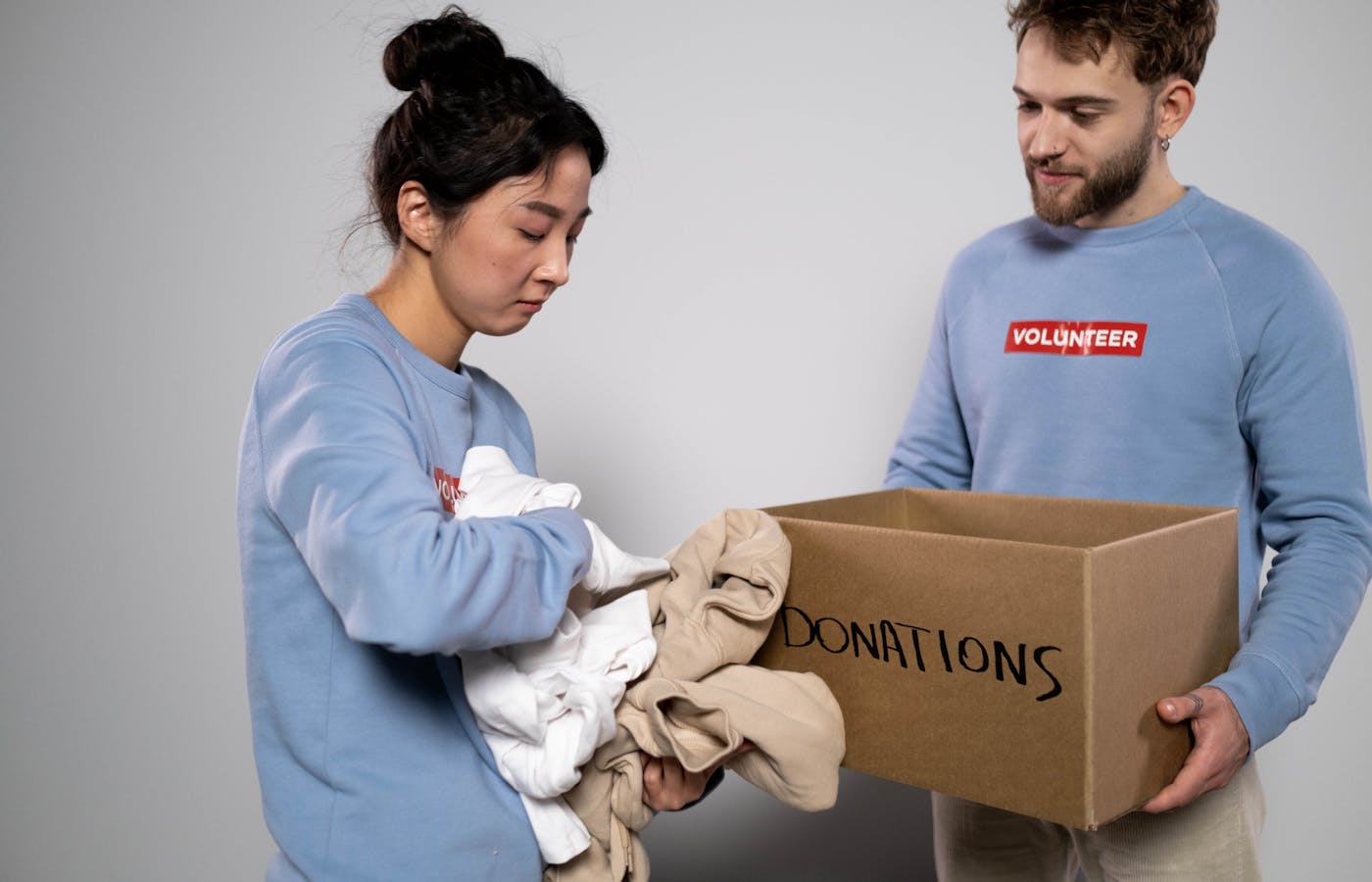
Donation bags become harder to release the longer they sit around. Once you have made a reasonable decision, close the bag or box and move it to an outgoing spot. If you leave it open in the bedroom, it invites review, doubt, and last-minute rescues that usually return clutter to the closet.
Before donating, check pockets, remove personal items, and make sure the clothes are clean enough for someone else to use. If a piece is damaged, do not pass the problem along. Keep a separate bag for textile recycling or trash so the donation box stays appropriate.
Use this closet finish routine:
- Choose one clothing category and remove only that category.
- Pick the easiest keeps first.
- Sort the rest into donate, repair, recycle, memory, or unsure.
- Return keeps with breathing room between items.
- Close the donation bag as soon as the category is finished.
- Schedule the drop-off before starting another major category.
Prevent clothing clutter from rebuilding
After decluttering clothes, the closet needs a simple maintenance rule. One useful rule is to review a category when it stops fitting comfortably in its drawer or section. Another is to pause before buying a replacement and ask what older item will leave. The point is not strict minimalism; it is keeping the closet from quietly returning to the same pressure.
Pay attention to laundry patterns. Clothes you wear often need easy access. Clothes you skip repeatedly may need a decision. If clean laundry never fits back into the drawer, the drawer is giving you useful feedback. Reduce the category or move seasonal pieces elsewhere.
A closet is easier to maintain when every item has enough room to be put away without a wrestling match.
Learning how to declutter clothes without regret is mostly about pacing. Sort one category, use current fit and real routines as your guide, protect a small amount of memory space, and move donations out quickly. That keeps the process honest without turning your closet into an emotional all-or-nothing project.