Best Way to Clean Windows Without Streaks
Window streaks usually come from timing, residue, or a towel that is too wet. The glass may look clean while you are wiping, then dry into cloudy lines a few minutes later. That is frustrating because the effort was real, but one small mistake can leave the window looking unfinished.
The cleaner does not need to be fancy. What helps most is using less liquid, working in the right weather, cleaning the dirty parts around the glass, and drying with a cloth or squeegee that is not already loaded with grime.
Clean windows without streaks during a cloudy hour
If you are cleaning several windows as part of a broader weekly cleaning schedule, follow the shade around the house instead of pushing through a sunny side. Inside windows are more forgiving, but outdoor glass warms quickly and can make even a good cleaner behave badly.
Weather also affects your own patience. If the glass is hot and drying too fast, stop after one pane and return later. Forcing the job usually leaves more marks than waiting.
Direct sun is the enemy of streak-free glass. It warms the pane and dries cleaner before you have time to remove it evenly. Choose a cloudy morning, a shaded side of the house, or a time when the sun has moved away from that window. If you must clean in warm weather, work in smaller sections so the solution does not sit and dry on its own.
Open the blinds or curtains and look at the glass from different angles before cleaning. Fingerprints, pet nose marks, cooking film, and outdoor dust show up differently depending on the light. Starting with a quick inspection tells you whether the window needs a light touch or a deeper pass around tracks and frames.
| Condition | Result |
|---|---|
| Cloudy or shaded glass | More working time and fewer dry lines |
| Hot direct sun | Cleaner dries too fast |
| Dusty frame | Dirty water runs onto clean glass |
| Too much spray | Smears collect near edges |
Clean the frame, sill, and track before the pane
Tracks deserve patience because they hold the grit that later turns into muddy drips. A dry toothbrush, cotton swab, or wrapped cloth can lift debris before liquid is added. Removing dry dirt first keeps the glass pass much cleaner.
For very dirty tracks, loosen debris dry first, then use a lightly damp cloth. Pouring water into the track can carry grime into corners and may create hidden damp spots.
Many streaks start outside the glass. Dust on the sill, grit in the track, and old cleaner on the frame can slide back onto the pane when you wipe. Use a dry brush, vacuum crevice tool, or folded cloth to remove debris first. For tracks, wrap a cloth around a butter knife or old card so you can reach narrow grooves without scraping paint.
If the frame is sticky, use a separate damp cloth before touching the window. Do not use your glass cloth on the dirty frame and then move it to the pane. That transfers grime directly to the surface you want clear. Separate cloths are one of the simplest streak preventers. One cloth can handle frames, one can wash glass, and one clean dry cloth can finish the edges.
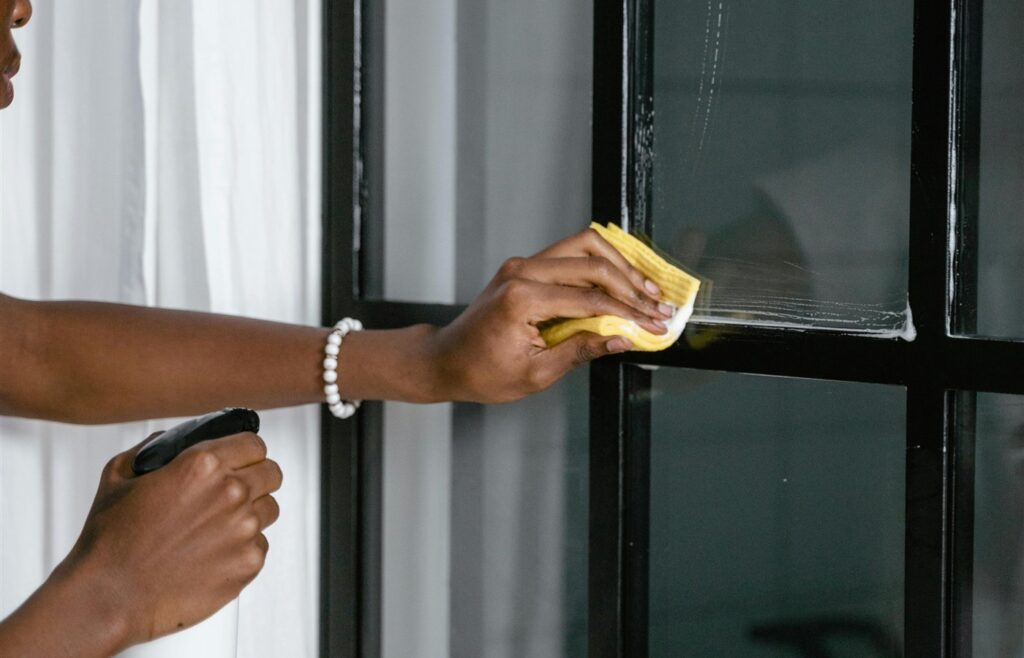
Use a light amount of cleaner and spread it evenly
Spray pattern matters too. Avoid soaking the top edge where liquid can hide under the frame and run down later. A damp cloth gives more control than spraying the whole pane, especially on smaller bathroom and kitchen windows. If the space has recurring dampness, EPA guidance is worth checking before you store absorbent items or cleaning products there.
If the window has old cleaner buildup, the first pass may look worse before it looks better. Use a clean damp cloth to remove residue, then finish with fresh cleaner and a dry cloth.
If your water leaves mineral spots, use a separate damp cloth first and finish with a dry microfiber cloth instead of adding more cleaner. Hard-water residue and cleaner residue look similar on glass, but extra spray only gives you more liquid to remove. The cleaner should loosen film, not flood the pane.
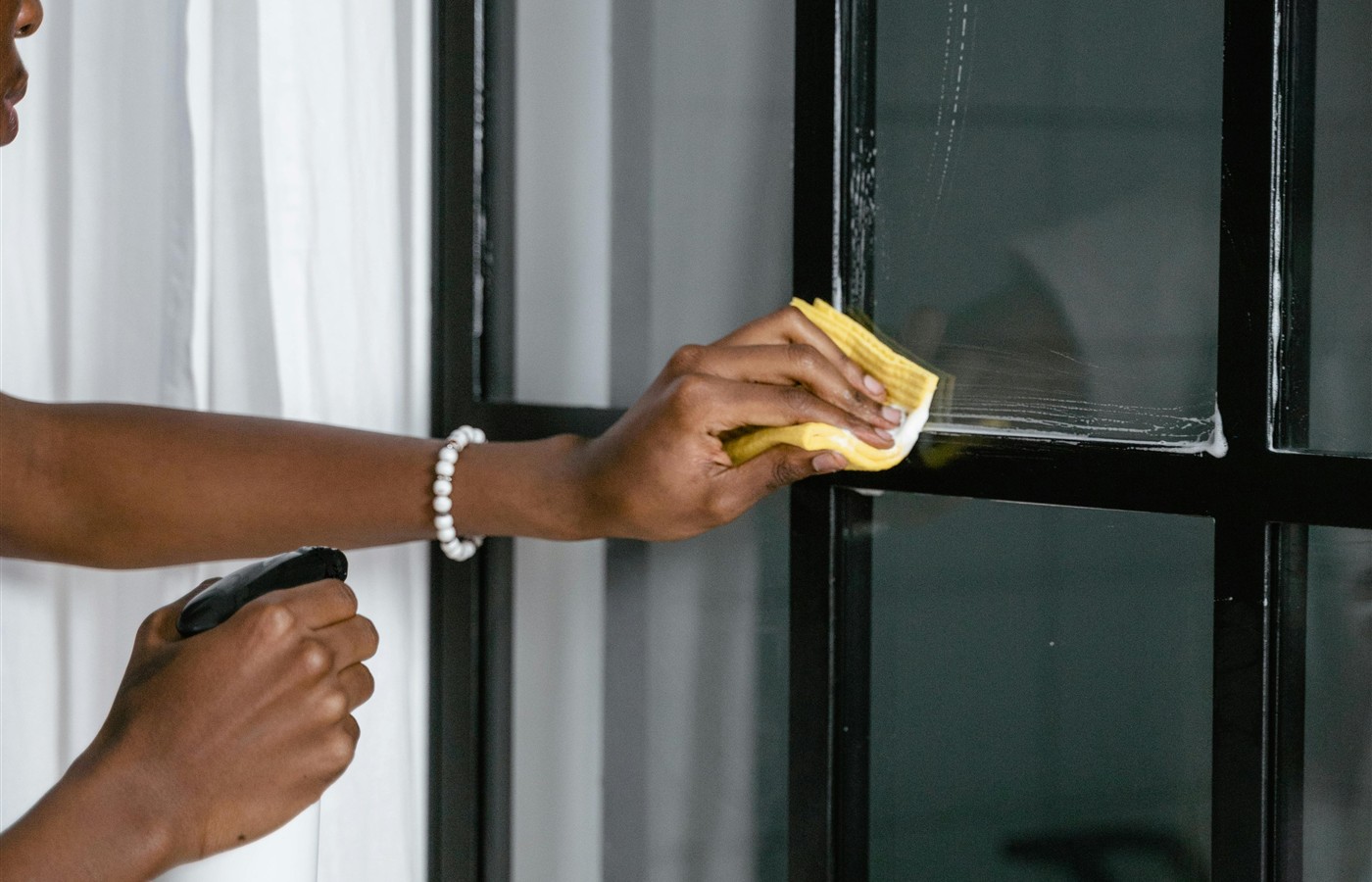
More product does not mean cleaner glass. Too much spray leaves excess liquid that has to go somewhere, usually into corners or cloudy lines. Mist the cloth or the glass lightly, then spread the cleaner across the pane in overlapping passes. If the glass is very dirty, wash once to loosen grime, then do a second lighter finish pass with a clean cloth.
A basic mix of water and a small amount of dish soap can handle many interior windows. Commercial glass cleaner is fine too, but it still needs restraint. Avoid oily all-purpose cleaners, furniture sprays, and cloths that have been washed with heavy fabric softener. Those residues can leave a film that looks like streaking even after the glass is technically clean.
- Use less cleaner than you think you need.
- Change cloths when they become damp and gray.
- Keep one dry cloth only for finishing.
- Wipe bottom edges before drips dry.
Dry with either a clean microfiber cloth or a squeegee
If you use a squeegee, keep a towel in your other hand. Wiping the rubber edge after each pull prevents one dirty line from being dragged across the next section. That small pause is often the difference between clear glass and faint stripes.
Squeegee direction is a preference, but consistency helps. Choose vertical or horizontal pulls for one pane, then inspect the final edge where all the liquid collects.
The drying step decides how the window looks. A clean microfiber cloth should move smoothly without leaving lint. Fold it into quarters so you can rotate to a dry side as you work. Use straight passes, then finish the perimeter where liquid collects. If you see a line after the first pass, buff it with a dry section instead of adding more cleaner.
A squeegee is helpful on larger panes. Wet the glass lightly, pull from top to bottom or side to side, and wipe the blade after each pass. Overlap each pull slightly so no strip is missed. Keep a cloth at the bottom edge to catch drips. The blade has to be clean and smooth; a nicked rubber edge can create a line that looks exactly like a cleaning mistake. Window tools are easier to reuse when storage-bin keeps cloths, blades, and sprays from becoming another loose pile.
Paper towels are not forbidden, but they are often wasteful and can leave lint. If they are the only option, use them for a final quick buff rather than the whole job.
Check the glass from the side before putting supplies away
For exterior windows, inspect after the glass dries because outdoor light changes quickly. A missed corner is easier to fix right away than after screens, curtains, or blinds are back in place.
If streaks return in the same shape every time, check the cloth. Fabric softener, laundry residue, or a worn towel can keep leaving marks even when your method is otherwise fine.
Use the shape of the streak as a clue. Vertical lines often come from the final drying pass. Cloudy patches usually mean too much product or a dirty cloth. Drips near the bottom edge usually started in the frame, track, or top corner. Fixing the source is faster than spraying the whole window again.
Streaks can hide when you look straight through the window. Step to the side and look across the pane at an angle. This shows cloudy bands, missed corners, and product left near the frame. Fix only the spot that needs attention. Re-cleaning the whole pane after one small line often creates more streaks than it solves.
Let the window dry fully before closing blinds against it or pushing curtains back onto damp glass. Fabric can transfer dust or leave small fibers behind. If outdoor windows are involved, clean screens separately and let them dry before reinstalling. A clean pane behind a dusty screen will still look dull from inside.
- Look across the pane from the side, not only straight through it.
- Dry the lower edge and frame corners where liquid collects.
- Fix only the streaked area instead of spraying the whole pane again.
- Wait until the glass is dry before closing curtains or blinds against it.
The window is finished when it looks clear from the normal places you stand and when the edges are dry enough not to create new lines a few minutes later.
Streak-free glass depends on timing, edges, and drying cloths more than on extra spray.