
Store Small Kitchen Appliances Without Tangled Cords
Published
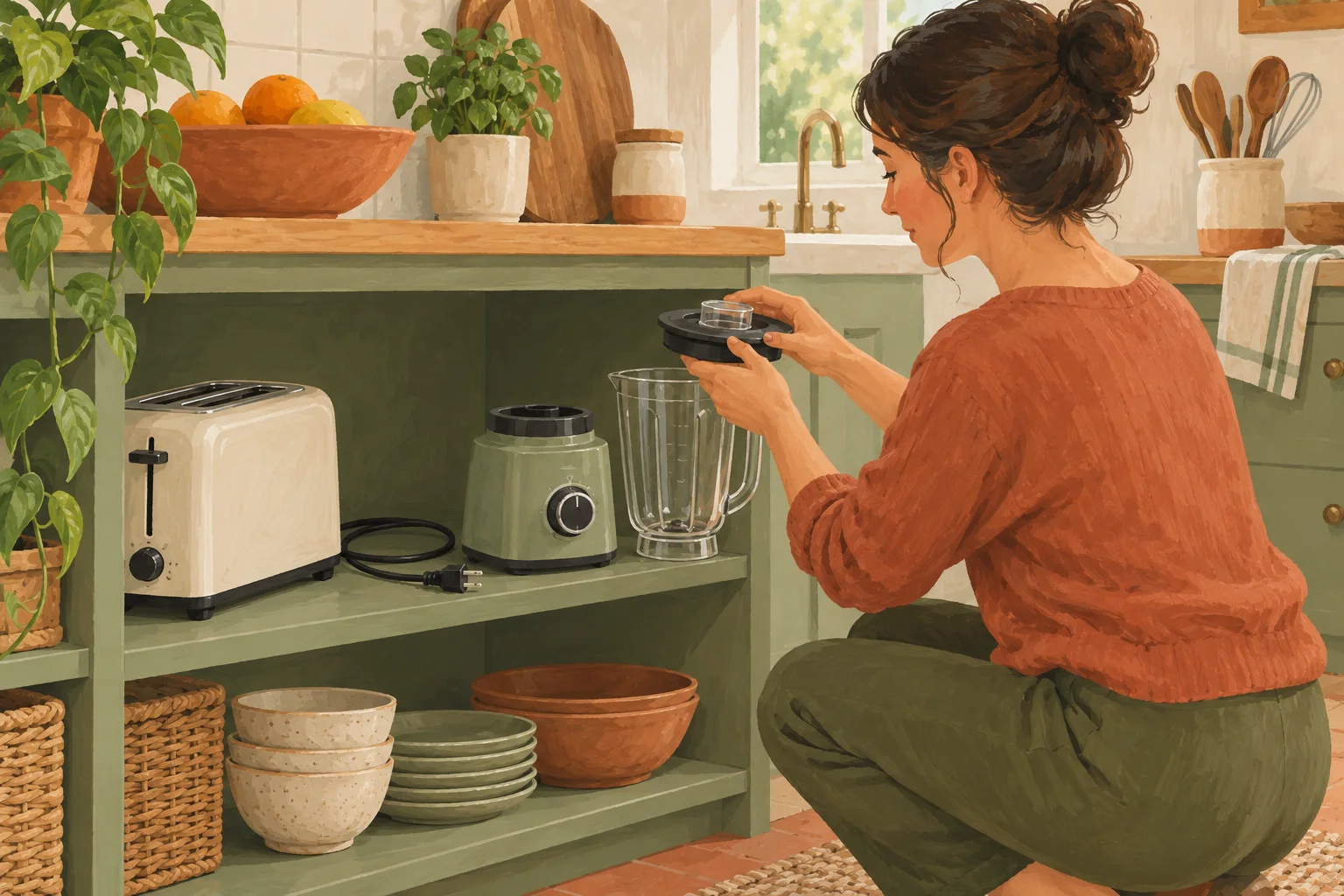
When a toaster shares a cupboard with a blender, tangled cords can turn a simple return into a pull on the wrong appliance. Give each unplugged appliance a stable place and keep its cord with it, arranged as the manufacturer permits. The cupboard should be storage, not a concealed operating station.
Start with the actual appliance manual. A built-in cord guide, removable lead or permitted storage position is model specific. A tidy-looking wrap around any available handle is not automatically suitable.
Finish use before starting storage
Switch off, disconnect and allow the appliance to cool as its instructions require. Follow its cleaning and drying procedure before putting it away. Do not cover a warm toaster with a towel to keep crumbs off the shelf or place a damp removable component against an electrical base.
For an example of the kind of instructions to look for, KitchenAid’s KMT3115 and KMT5115 manual includes unplugging and cooling precautions, cord restrictions and a specific cord guide. That manual applies to those models; use the corresponding instructions for your toaster rather than copying their routing detail onto another appliance.
Keep any appliance with a damaged cord, loose plug or other unresolved fault out of ordinary use and arrange appropriate service. Do not hide a problem beneath a cord organizer or attempt a tape repair as part of a cupboard reset.
Choose the landing place before winding the cord
Set aside a stable shelf area from which the appliance can be retrieved with a secure grip. Heavy equipment should not be stored above a person’s comfortable reach because an upper shelf happens to be empty. Check shelf and organizer limits rather than inventing a safe weight from the cupboard’s appearance.
Leave room for the handle or body grip the appliance actually provides. If the only way to remove it is pulling the lead, the space is too tight or the arrangement needs changing. A cord must not become a lifting handle.
The everyday kitchen cabinet guide covers weight and reach across the room. For appliances, test the return route as well: where will the clean blender jug land while its base goes back, and can the door close without pressing on the plug?
Keep the cord attached to the right decision
Use a manufacturer-provided storage feature according to its directions. Where no feature is specified, avoid tight bends, stretched leads, crushed plugs or wrapping a cord around a hot or sharp part. Ask the maker if the safe arrangement is unclear.
Do not add an adhesive hook or reel merely because it fits on the casing. It could obstruct a vent, cover a label or change how the appliance sits. An accessory needs to be permitted for the actual use, including the next occasion when the appliance is returned to the counter.
For a detachable lead, keep the correct approved lead identifiable with its appliance. A similar-looking connector is not proof that another cable is interchangeable. Retain the model information and ask the manufacturer about uncertain replacements; this organization task does not include electrical compatibility testing.
A cupboard arrangement with fewer crossovers
Imagine a toaster and blender stored on the same low shelf. The toaster has its own clear position, with its permitted cord arrangement entirely inside that position. The blender base sits beside its dry jug rather than under a pile of loose attachments. Each item can come out without dragging the other’s plug.
That is an illustrative layout, not a declaration that your shelf can hold those appliances. The useful principle is separate retrieval. If two heavy items cannot be removed independently, find a different location instead of nesting them more tightly.
Give small removable parts a nearby defined place only if their instructions allow that storage. Keep sharp blades protected by their prescribed covers or arrangements and inaccessible to children. Do not create an open basket of loose blades, plugs and measuring cups.
A plain shelf label can help another household member return the item without winding the lead around the neighboring appliance. It need only name the model or item and its stored components. Avoid a complicated numbering scheme when two recognizable positions will do.
Bring the appliance back to a suitable operating surface
Before the next use, remove the appliance to the location its manual permits and arrange the cord and clearances accordingly. Do not operate it inside a closed cupboard, under stored textiles or with a cord trapped in the door because the shelf is conveniently near an outlet.
Check that nothing has fallen into the appliance during storage and follow its normal preparation instructions. Where a part is missing or a lead was damaged, resolve that before switching on. A successful fit in the cupboard is only a storage result.
After a few ordinary uses, notice which part keeps getting tangled or left on the counter. Adjust that item’s space or return sequence. The improvement should make retrieval and safe preparation easier, without adding a new electrical workaround.