
Store Board Games So Their Pieces Stay Together
Published
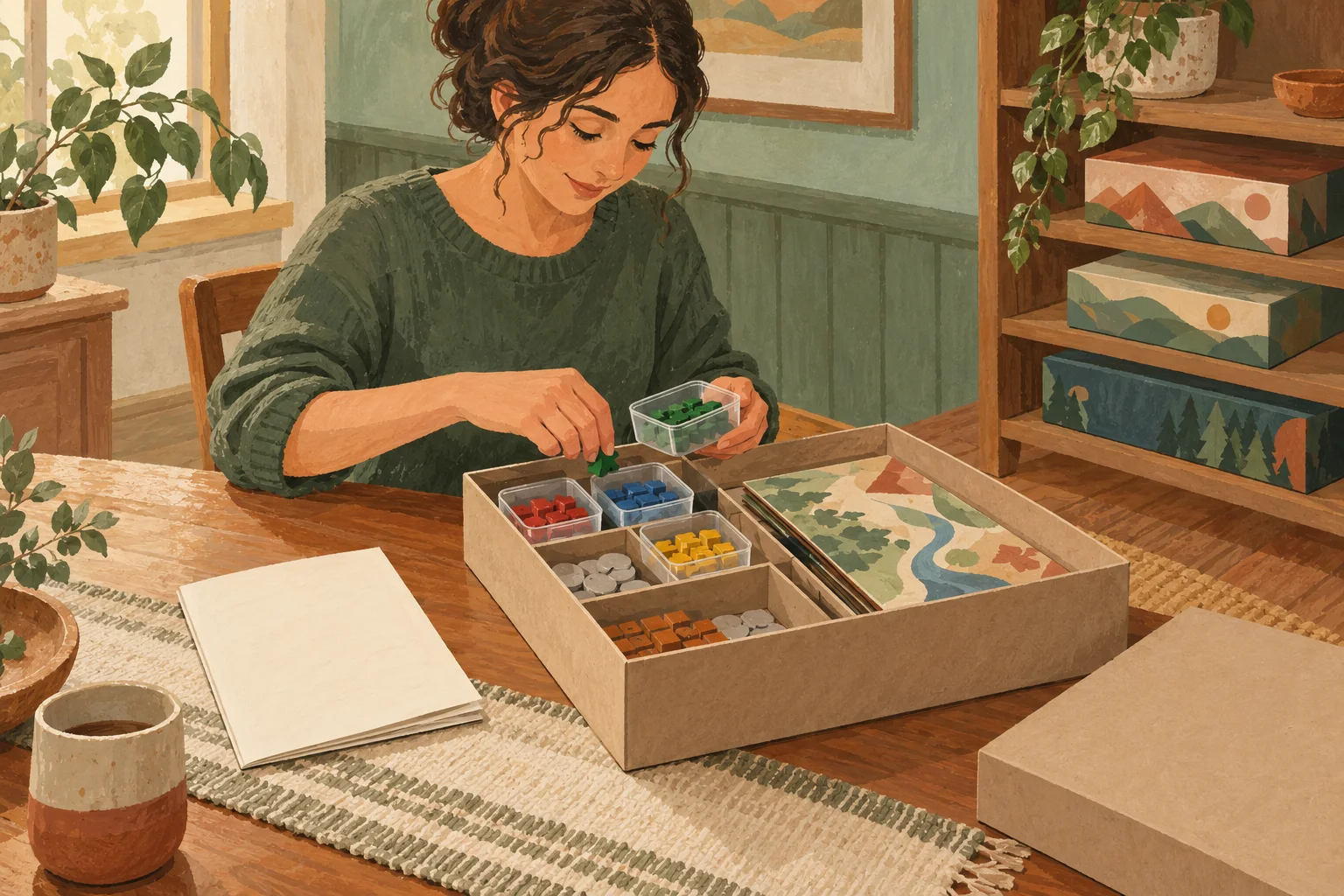
A board-game box can look complete on the shelf while its counters sit in another game and its instructions belong to a different edition. Before changing the storage, put one set on a clear table and establish what belongs together. A useful system makes the next game easier to start and finish.
Keep small components and packaging under appropriate adult control while sorting. Follow the product’s age and safety information, particularly when younger children or pets share the room. A conveniently low open bin is not suitable for every game.
Identify the actual edition
Check the box title, product details and instructions together. A familiar game name may cover several editions or versions with different components. Do not fill an apparent gap using a parts count from a similar-looking online listing.
For a manufacturer example, Hasbro’s official instruction search accepts product names and numbers and lists distinct versions. Use the corresponding official source for your game. Finding an available manual is not a promise that replacement parts are still supplied.
Keep an intact instruction booklet with the set where practical. If you save a permitted digital copy for household reference, identify it by the actual game and edition. Avoid replacing the original rules with a mixed collection of screenshots from another version.
Count against a known list, not against memory
Use the game’s actual component list where available. Group like pieces on the table, then count one group at a time. Keep a note of an uncertainty instead of marking the set complete because the lid closes.
Here is a fictional counting example, not the contents of a real game: the instructions specify twelve counters, but you find ten. Record “two counters missing” beside that component. Do not record “game incomplete” without the detail, or borrow two random pieces and forget that the set was changed.
Ask the publisher about a missing or damaged essential component when appropriate. An improvised piece can change play or introduce a hazard. A stored game should not be presented as complete for sale or donation if that has not been established.
Group pieces by the way the box closes
Retain suitable original inserts and containers where they still work. If grouping components separately, choose an arrangement that fits without crushing the board, bending cards or forcing the lid. Do not assume every box can be stored upright after loose pieces are added.
Keep the opening routine manageable. Four containers may be useful for four distinct groups; twenty tiny organizers can turn cleanup into another project. Try one group first and check whether another household member can return it correctly.
Label only what needs distinguishing. A removable label on a component container can identify its game and group without writing on collectible cards or taping across printed surfaces. Follow any product-specific care instructions rather than applying a household cleaning spray to paper pieces.
Keep unfinished play separate from stored sets
If a game is paused, agree whether it can remain safely on the table or needs an appropriate temporary arrangement. Do not sweep its pieces into another game’s box just to clear dinner space. Record enough about the paused state for the actual players, if they want to continue later.
A defined location for a single paused game can help, provided it does not obstruct access or expose small pieces to someone who should not reach them. Our toy storage guide covers broader active-play and unfinished-project arrangements; this box-level check keeps a particular set identifiable.
When play is finished, compare the components with the known list before closing the box. Look around the immediate play area for a missing piece without asking children to reach into unsafe gaps or move heavy furniture.
Choose storage for the people sharing the home
The CPSC’s toy safety guidance advises following age information and keeping toys with small parts away from children under three. A game suitable for an older player does not become safe for a younger sibling because its pieces are sorted into attractive containers.
Choose stable accessible storage appropriate to the permitted users, with adult-controlled access where needed. Respect shelf limits and furniture anchoring instructions. Do not stack heavy boxes so high that retrieving one brings down the rest.
Leave any unresolved set clearly identified rather than mixing its remaining pieces into a general spare-parts tub. The next useful action may be finding the correct instructions or asking about one missing component. A small specific note preserves that decision without requiring the whole collection to be reorganized again.