
A Gift-Wrapping Kit That Fits in a Small Home
Published
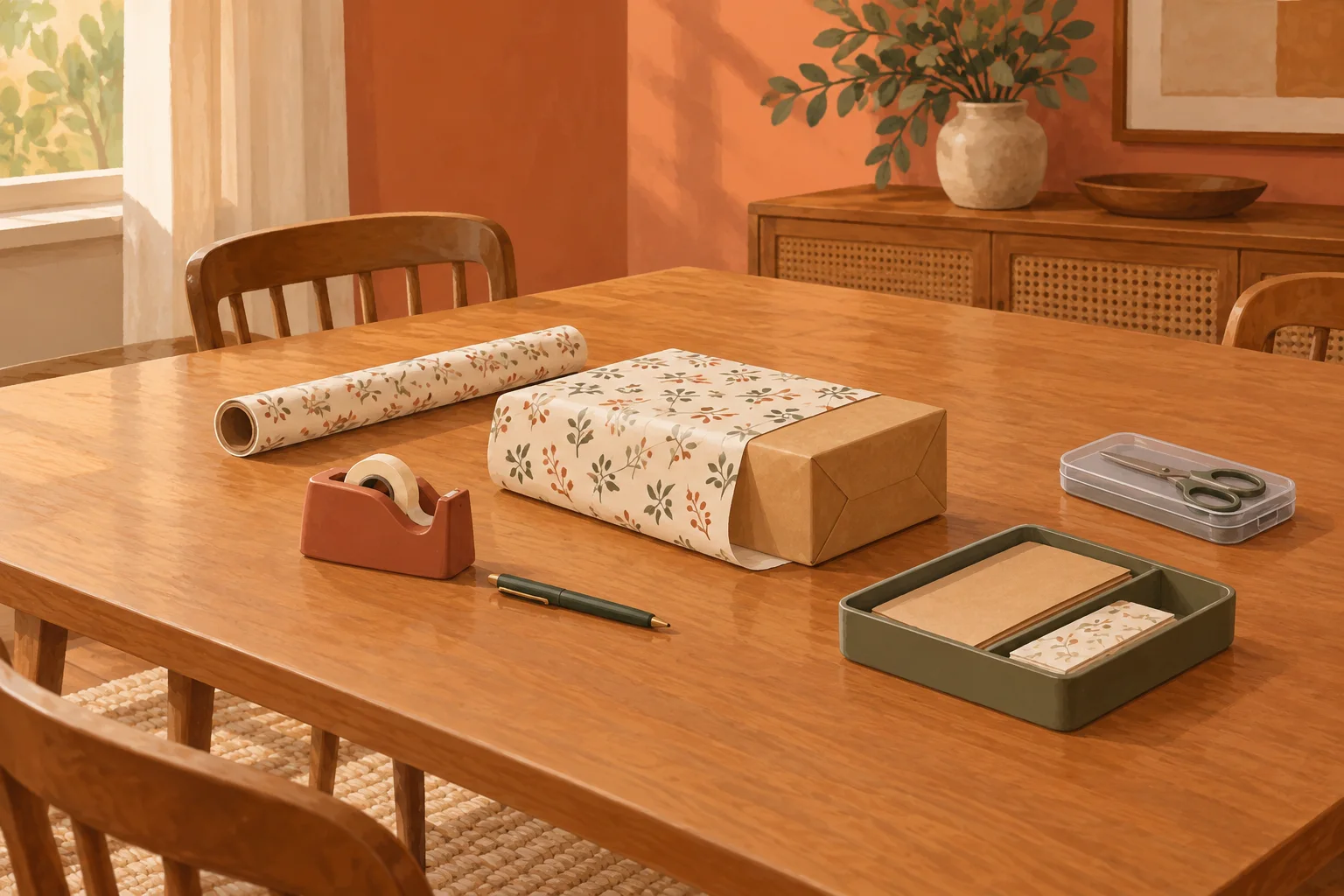
A small home can handle gift wrapping without keeping a permanent wrapping table. Choose a temporary clear work surface, bring out one contained kit and decide where it goes when the surface is needed again. The kit should be sized to what you wrap, not to every decorative material you might use someday.
Build around the next few gifts
Gather the packaging and tools already available. Keep usable paper, a manageable selection of tags, the appropriate tape and a pen together. Add scissors stored safely in a protective or secured arrangement appropriate to the household. Leave specialist cutting or heated tools out unless the actual project needs them and you can use and store them safely.
Check the gifts’ shapes before buying more material. A reusable bag may fit an awkward object better than a large new roll of paper. A box already available may need only a tag. Do not add ribbon, filler and decorative picks simply to make the kit look complete.
Keep the recipient list separate from private purchase and delivery records. A small note can show which gifts still need packaging without exposing addresses or personal order details on a shared table.
Choose storage by the shape of the material
Flat paper belongs where it can remain supported and dry. Long rolls need a location where they cannot fall into the walking route or interfere with a door. A shallow project box can hold folded paper and small tools, while long rolls may need a separate existing shelf or cupboard space.
Measure the kit’s intended home before choosing a container. Include the length of a full roll and the space needed to remove it. Avoid a tall unstable bin that becomes a convenient climbing or tipping hazard. The broader small-space craft storage guide covers material and tool boundaries; the wrapping kit can be a small active subset of that collection.
Do not mix sharps, tiny decorations and loose ribbon into a child’s general paper box. Keep adult-only supplies secured and provide age-appropriate materials under supervision if children are helping. Height alone is not a reliable access control.
Open the kit on a usable surface
Clear enough space to turn the object and handle the paper without knocking nearby items. Keep drinks, food preparation and household chemicals away from the project. If the dining table must return to meal use, choose a point where you can pause and clear the materials completely.
- Bring out only the gifts and supplies needed for the session.
- Keep scissors visible while in use, then secure them immediately afterwards.
- Collect backing strips, plastic film and small scraps as you work.
- Keep ribbon and string contained and inaccessible to pets and young children.
- Leave exits and walking routes clear, including the route used to carry finished gifts.
A floor covered in paper may appear spacious but is easily crossed by another person, child or pet. Use a suitable stable work surface if possible, and stop when safe supervision or access cannot be maintained. Do not spread supplies across stairs or a shared corridor.
Store a paused project without losing its identity
If you need to stop, put the unfinished gift and the materials it needs into a labeled project area separate from the general kit. Keep the recipient identifiable to you without writing sensitive information on an exposed outer container.
Return sharp tools and loose small parts to their secured storage, even if you plan to resume shortly. An open project tray is not safe storage for everything. Keep wrapped gifts away from heat sources, moisture and places where they block access.
For a family session, agree who clears the surface and who stores finished gifts. Do not leave one person assuming the scissors are in the box while another placed them under a sheet of paper. A final visible tool check is simpler than searching through a bag of scraps.
Close the session before putting the kit away
The CPSC’s holiday safety guidance includes prompt removal of plastic wrapping and other packaging after gifts are opened. Apply the same attention to hazardous loose packaging generated during preparation. Follow local disposal guidance for the actual material rather than assuming every shiny paper or ribbon belongs in recycling.
Keep only scraps large enough and suitable for a real later use, in a limited flat envelope or small container. If that container is full, use what it holds before adding more. Put tape and pens back in the active kit, note anything genuinely missing and return the kit to its measured home. The work surface should be ready for its next purpose, not left waiting for a second storage project.