
Keep Household Manuals and Warranty Details Findable
Published
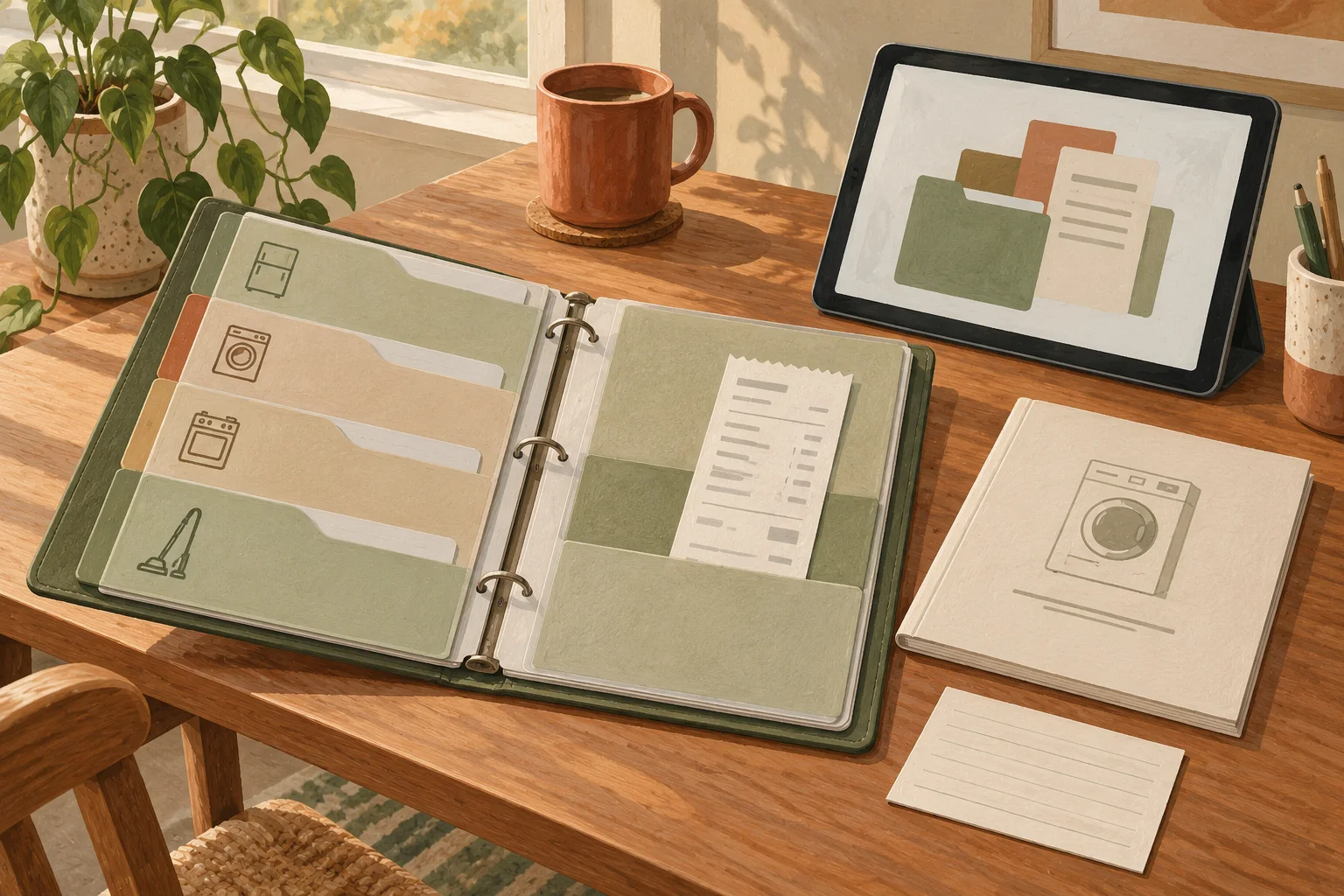
The manual tells you how to use an appliance; the receipt records a purchase; the warranty describes particular coverage. Keeping all three under a file named “Kitchen” may be tidy without making any of them easy to find. Link them to the actual item in a short household equipment index.
Start with an appliance you still own and may need to service. You do not need to catalogue every object in the house. One complete example can show whether the system answers a real question before you spend an afternoon naming files.
Give the item a recognizable identity
Record the name the household uses, its location, brand and exact model details from the permitted label or documentation. Include a serial number privately where useful. Do not dismantle an appliance, pull out heavy installed equipment or expose electrical parts just to photograph a label.
A model suffix can matter when retrieving a manual. If the official support page presents several versions, check the full identification instead of saving the first plausible PDF. Mark a missing or uncertain identifier rather than completing it from an online photograph.
Keep installation or supplied-accessory documents with the same item where relevant. A general appliance booklet may not include instructions for an installed accessory. The index should point to the separate file, not silently claim that one manual covers everything.
Use separate links for separate evidence
A simple entry could contain these fields:
- Household item name and present location.
- Exact model, with private serial details where needed.
- Official manual file or verified support location.
- Purchase receipt location and the date it actually records.
- Warranty document and any separately purchased service contract.
- Installation, service or claim correspondence, if applicable.
These are index fields, not a declaration that every item has warranty coverage. A gift, secondhand purchase or product with missing paperwork may need a different evidence trail. Keep what you actually have and ask the relevant provider about gaps.
The U.S. Federal Trade Commission’s warranty guidance recommends saving the warranty and product receipt together. It also distinguishes a separately purchased service contract from a product warranty. Its legal explanations are U.S.-specific; the filing approach here does not establish rights, deadlines or coverage in another market.
An example with two similar appliances
Imagine a household has a kettle on the counter and a spare kettle stored elsewhere. This is a fictional filing example, not a product recommendation. Saving both manuals as “kettle.pdf” makes it easy to open the wrong one when a question arises.
Give each entry a recognizable name, such as “counter kettle” and “stored kettle,” then attach its exact model and corresponding documents. If one receipt contains several purchases, keep an intact copy and note which line relates to the item. Do not crop away the date or other information the provider may need.
If the spare replaces the counter appliance, update the location field without transferring the other item’s warranty or history to it. An equipment record follows the physical item, not whichever object occupies the same patch of counter.
Keep the paperwork intact
Download permitted copies from official sources and use meaningful filenames. A date, item name and document type can help: “purchase receipt,” “manual” or “service report.” A filename saying “warranty” is not evidence that the attached document actually contains the terms.
Check that a saved file opens and that important text is legible. For a receipt, retain the original where required or useful; a photograph is not automatically a substitute for every claim process. Back up useful digital copies in an appropriately protected location rather than relying on an email attachment you may later delete.
Our household paperwork guide separates reference material from active tasks. Use that distinction here: an unresolved registration or a requested service response needs a next action, while the manual remains reference material.
Do not turn an index date into a coverage decision
Write dates exactly as supported: purchased, delivered, installed or serviced. They may not be interchangeable under the relevant terms. If you add a reminder, identify what needs checking instead of declaring the item unprotected when that reminder passes.
For a claim or repair question, read the actual documents and contact the named provider through verified details. Keep a dated copy of correspondence and any reference number. Do not infer that a registration confirmation guarantees a particular repair, or that a service contract cancels other applicable rights.
When an item leaves the household, review what can appropriately go with it and what must remain in your records. Remove private information from anything shared, but do not destroy purchase or claim evidence under a blanket decluttering rule. The finished index should help locate facts without making legal conclusions on your behalf.