
Store Cleaning Cloths Without Mixing Clean and Used Ones
Published
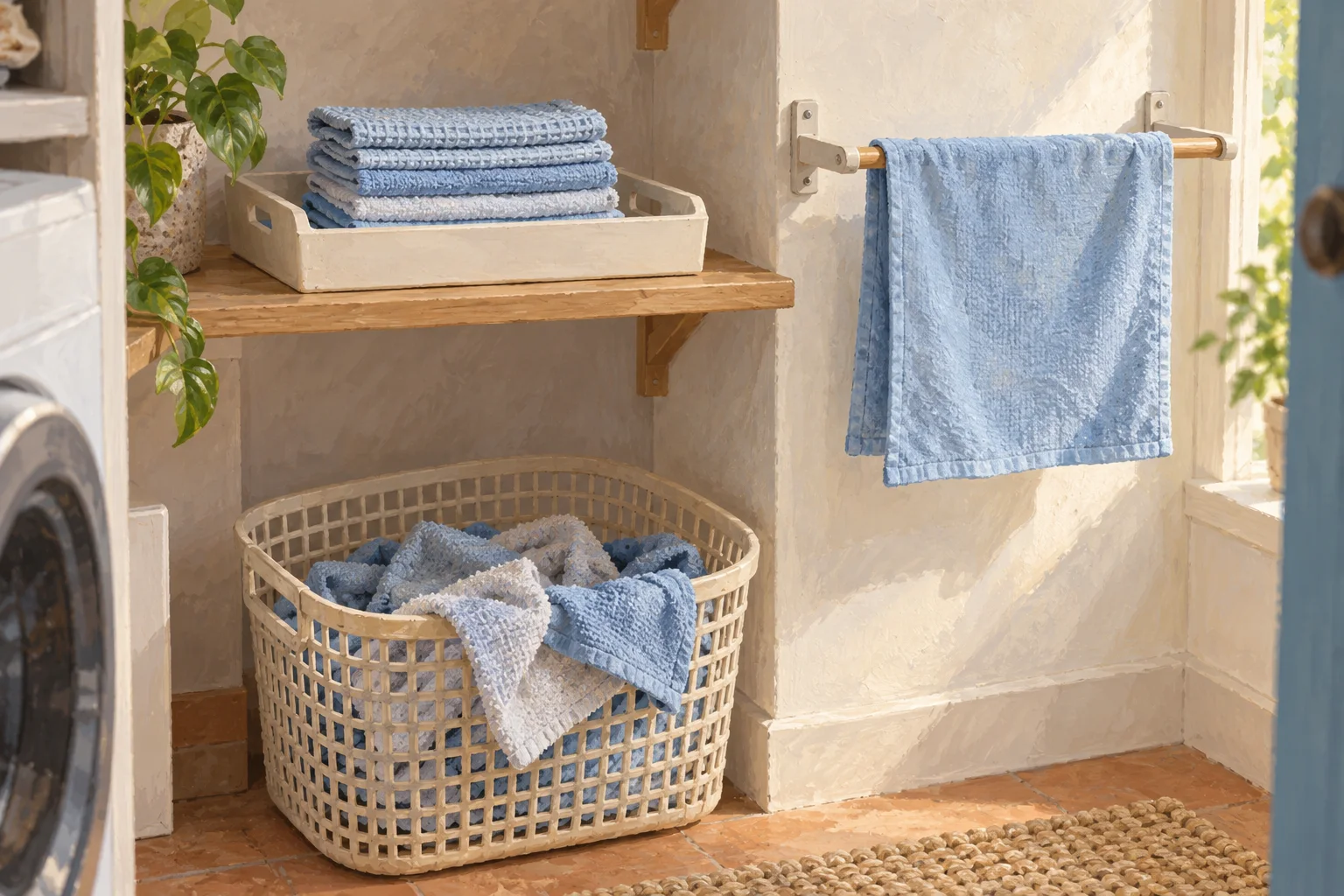
When a cleaning cloth is folded neatly, it is hard to tell whether it is clean, used or waiting to be washed. Give those states different places. Keep fully clean, dry cloths in their own storage, and move a cloth out of that supply as soon as it is used.
Use an existing dry shelf, a suitable washable return container and a separate drying place. Label the locations by the state of the cloths they hold.
Separate the clean supply from the return route
Choose somewhere dry for clean cloths, away from leaks and splashes. Keep enough space to take one without pulling the whole stack onto a wet counter. The container should be easy to inspect and clean according to its material’s instructions.
Put used cloths somewhere visibly different. An open container beside the clean stack can be confusing, especially if both hold the same folded fabric. A separate location and a plain label make the distinction easier for someone who did not arrange the system.
Do not use the clean-cloth shelf as temporary storage for a cloth you expect to reuse later. Once it has done a cleaning job, its next destination should reflect that use. Keep bathroom cloths separate from kitchen and food-area tasks, and explain any task labels to everyone who cleans. Color can support that rule, but a color nobody understands does not establish what a cloth has touched.
Plan for damp cloths before adding a lid
A wet cloth dropped into a closed container can stay damp. Decide where ordinary used cloths will go for laundering and where washed cloths can dry fully. Do not press a damp bundle under dry cloths to make the shelf look finished.
Follow the cloth’s care instructions and the cleaning product’s directions when deciding how to handle it. A cloth containing an unfamiliar chemical, solvent or other hazardous residue does not belong automatically in ordinary household laundry. Keep people and pets away from an uncertain residue and get product-specific handling and disposal guidance.
For ordinary washable cloths, arrange a laundry route that fits how quickly they accumulate. The CDC’s household cleaning guidance advises laundering towels and similar items with detergent at the recommended water temperature, drying them completely, cleaning laundry containers and washing hands after handling dirty laundry. It does not make a cloth clean merely because it has dried.
Hang washed cloths so they can dry according to their care instructions, with room around them rather than in a compressed pile. Keep that drying position separate from the clean storage. If there is no appropriate space to dry an item, choose a suitable care method before increasing the number of cloths in circulation.
A small-space arrangement
Imagine one shallow tray on a dry laundry shelf for clean cloths, a separate washable container for ordinary used cloths awaiting laundering, and a short rail for washed cloths still drying. Nothing moves to the clean tray until it has been laundered appropriately and dried completely.
That arrangement needs only a few labels: what the clean supply is for, where used cloths go and what the drying rail holds. Choose locations that do not block a door or require somebody to reach over chemical bottles. If children or pets can reach the used items, choose storage and access controls suitable for those contents.
A shared bathroom may need a local return container rather than a rule requiring everybody to carry a wet cloth across the home. Check that the chosen container and routine are suitable, and keep its purpose obvious. Empty and clean it as appropriate instead of using another container whenever the first fills.
Keep chemicals in their own storage system
A cloth organizer is not permission to move cleaning products into a convenient open basket. Products still need their original labels, secure storage and any separation their directions require. Our guide to safe cleaning supply storage covers that separate task.
Do not add a general disinfectant mixture to a used-cloth container or combine residues from different cleaners. A reusable cloth’s washing instructions and a surface disinfectant’s label describe different uses. Neither authorizes an improvised soaking recipe.
After laundering, leave cloths marked as washed and still drying apart from the fully dry supply. Return them to the clean shelf only when dry. Show another household member the three locations; move a difficult-to-reach container to a suitable accessible place if it is causing mix-ups.